The Story Held In the Guesthouse
A guesthouse of “giving back,” born from the home of grandparents
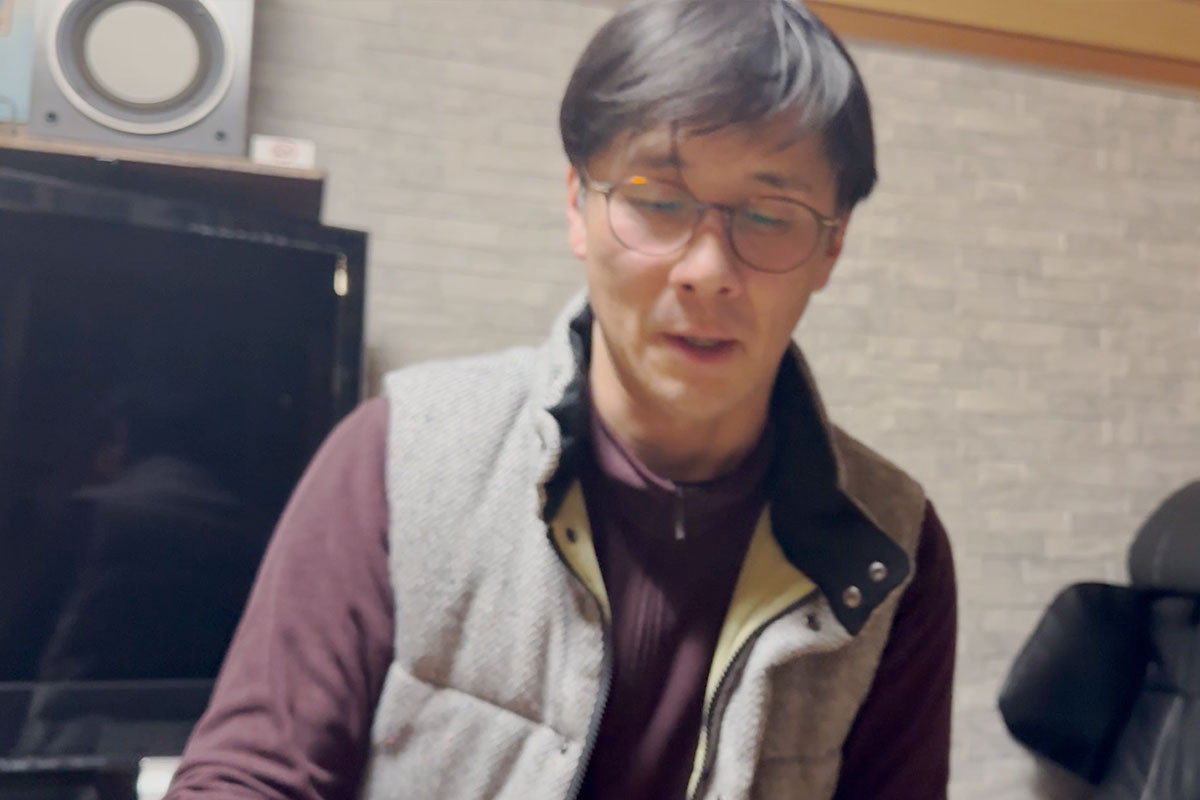
The origin of 60 BASE lies in Mr. Takeda’s childhood memories of time spent at his grandparents’ home in Ehime. In that old house, with its earthen floor, kamado stove, and well still intact, surrounded by rice fields, time flowed in a way completely different from the city. What stayed with him most vividly was the quail farming his grandparents ran. From feeding the birds to collecting eggs, shipping them, and even seeing their lives through to the end — that unbroken rhythm of daily life taught him what it meant to “live rooted in the land.”
As time passed, his grandparents grew old, closed down the quail sheds, and rebuilt the house. But after their passing, it became “a house where no one lived.” From that point, Mr. Takeda’s life began to change dramatically.
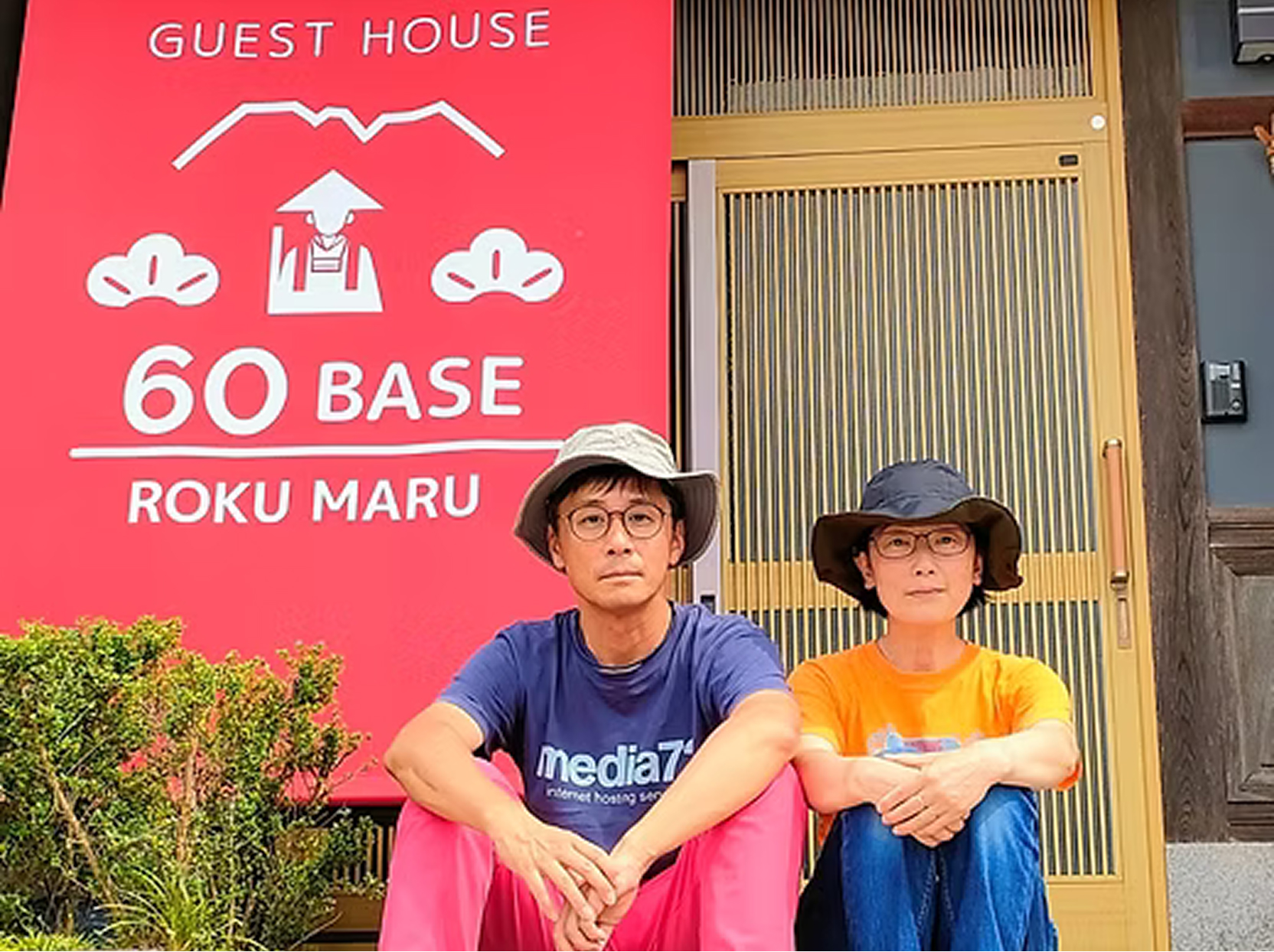
After his grandfather passed away, as he visited his grandmother in the care facility and traveled every month from Osaka to Ehime to look after the now-empty house, he came to feel more and more strongly that “if we want to protect this land passed down from our ancestors, we ourselves have to make the decision and take action.” Letting go of the stability of a civil service job and moving to Ehime was a decision so major that people around him tried to stop him. It was his wife who supported that decision, who had worked alongside him, and gradually developed a deep attachment to this place. In this way, 60 BASE began as an effort to transform “the home of our roots” into “a home that welcomes travelers.”
I want this place to be more than just a relationship of “service” or “business.” At its foundation, I want it to be a space where people can toss the spirit of osettai back and forth. Yes, we receive money. But I think that sense of surprise — “They would do this much for me?” — is what leads someone to pass kindness on in return.
The Owner’s Thoughts and Philosophy
I worked as a civil servant in Osaka for many years. It was stable. But after my grandfather passed away, my grandmother moved into a care facility, and I began taking responsibility for managing the empty house, the center of gravity in my heart started to shift. I began to feel, “There is something here that only I can do.” My job in Osaka could be handed over to someone else. But this land passed down from my ancestors, and its history — if I myself did not act now, all of it would be cut off. That is how I came to feel.
I worked as a civil servant in Osaka for many years. It was stable. But after my grandfather passed away, my grandmother moved into a care facility, and I began taking responsibility for managing the empty house, the center of gravity in my heart started to shift. I began to feel, “There is something here that only I can do.” My job in Osaka could be handed over to someone else. But this land passed down from my ancestors, and its history — if I myself did not act now, all of it would be cut off. That is how I came to feel. To quit my job and relocate was, honestly, a very big decision. In the world of civil service, almost no one leaves halfway through, so no matter who I asked, they would say, “Are you crazy?” But houses where no one lives, and fields no one farms fall into ruin in no time, and that in turn affects the surrounding area as well. I felt there was more than enough reason and value in retiring and moving there without waiting for retirement age. And above all, my wife’s understanding meant a great deal — she had been coming with me from the time of those regular visits, working hard alongside me, and deepening her love for this place.
To quit my job and relocate was, honestly, a very big decision. In the world of civil service, almost no one leaves halfway through, so no matter who I asked, they would say, “Are you crazy?” But houses where no one lives, and fields no one farms fall into ruin in no time, and that in turn affects the surrounding area as well. I felt there was more than enough reason and value in retiring and moving there without waiting for retirement age. And above all, my wife’s understanding meant a great deal — she had been coming with me from the time of those regular visits, working hard alongside me, and deepening her love for this place. When I decided to relocate, I had already decided from the start to open a lodging place for pilgrims. When I was 22, I experienced the pilgrimage on foot, and I received so much "osettai" from people across Shikoku. My grandparents, too, came to cheer me on again and again wherever I was along the way. “It’s not right to just keep receiving. Someday I have to give something back.” That feeling had not faded even after 30 years. When I came to live in this place, I wanted to repay the people of Shikoku and the pilgrimage culture of Shikoku. When I thought about it that way, a guesthouse seemed like the perfect vessel for giving back.
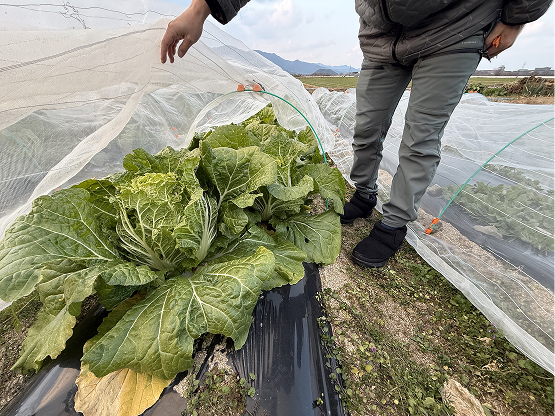
What we especially value as part of our guesthouse service is the food.We are certified by Ehime Prefecture as a “farm stay,” and we grow a wide variety of vegetables, fruit, and rice. Every day, we serve our guests homemade meals prepared with 10 to 15 kinds of homegrown vegetables.
Through farming and cooking, we hope our guests can come to know the way we live. And for our guests as well, we hope this becomes an opportunity to gain a deeper understanding of the lives of people in Shikoku, and in Japan.
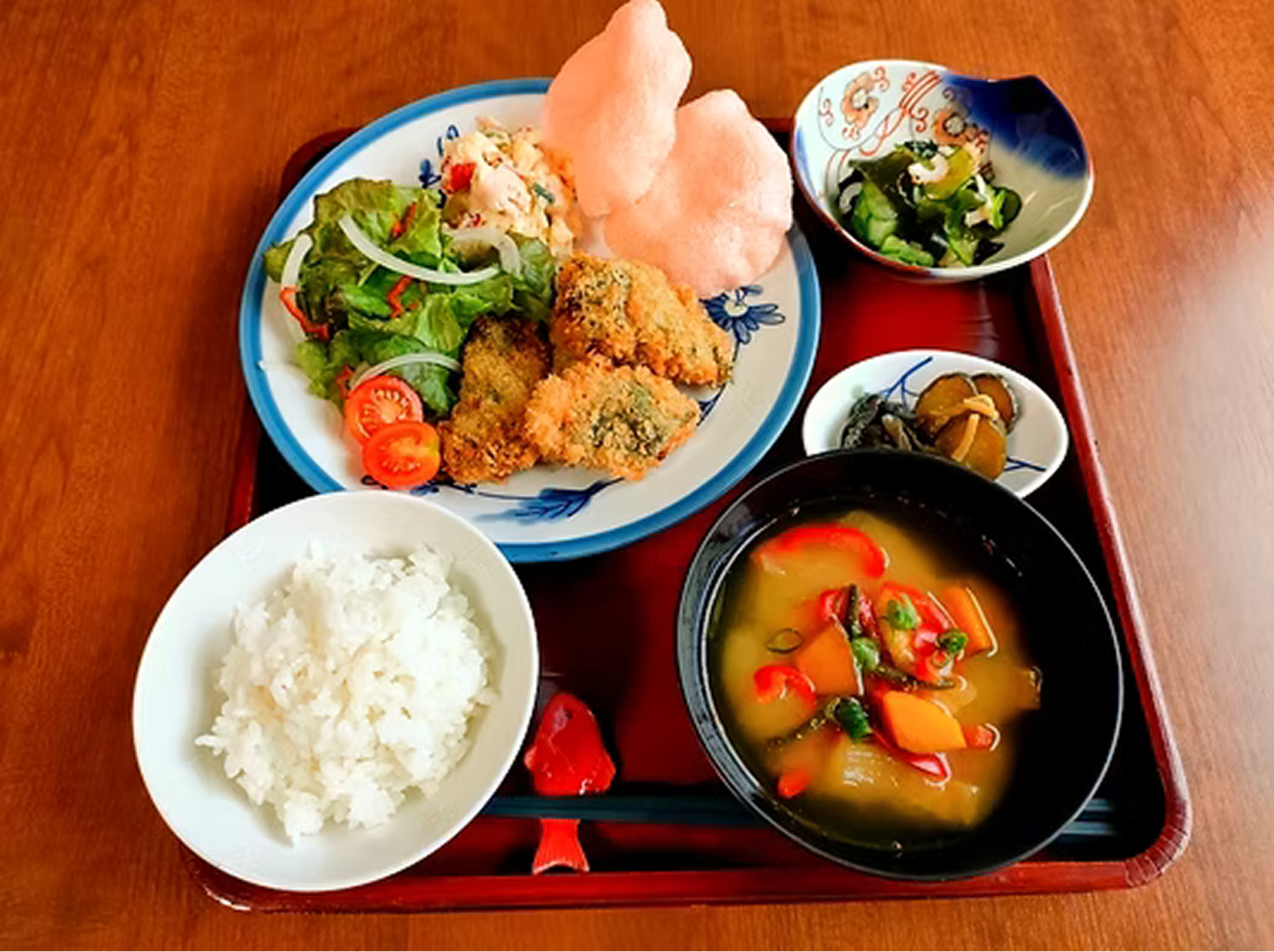
Our guesthouse was originally a “home” where my grandparents lived, so we only have two guest rooms, and the bath is also small. I imagine there may be some inconveniences, but we are also able to offer attentive service, such as serving freshly prepared food and helping guests plan their journey.
I would be very happy if people could feel the “heart” of our osettai in that, and I hope this will be a place that passes on the “baton of osettai” — a guesthouse where what our guests receive here makes them want, someday and somewhere, to give something back to someone else.
To pass the baton of osettai on to the next generation
A place to discover “ordinary Japanese life” in its real form
More than 90% of 60 BASE’s guests are walking pilgrims. And of those, about 45% are international guests. For guests from overseas, being able to encounter everyday Japanese life in its real form through the architecture and food is something they find especially valuable.
Also, many international guests express their gratitude and joy directly in words. They make sure to clearly say “thank you.” That culture is a great encouragement to me.
Everyone has their own reason for pilgrimage. To a place where all can find peace of mind.
In the past, many people on the Shikoku pilgrimage had lost their hometowns and continued wandering. Today’s pilgrims often include people with experience on long trails such as the Camino de Santiago or the Kumano Kodo, as well as those who want to discover a side of Japan that cannot be experienced through tourism in places like Kyoto or Atami. Some come in order to make time to reflect on their lives and carve out a path toward the future. 60 BASE hopes to remain a place that quietly receives different motivations and feelings of travelers, and helps anyone regain the physical condition and peace of mind to start walking again the next day.
A heartwarming story with a pilgrim
- A French chef repaid kindness with a “recipe”
- One day, a French chef stayed at 60 BASE. When Mr. Takeda asked for advice on the béchamel sauce in the soy milk gratin he had served, the chef later sent him his own recipe a few days afterward. Not just with words of “thank you,” but by giving back with “his own skill.” That sincerity became an unforgettable gift for the host.
- “You really think this dish is delicious too, don’t you?”
- On another day, a young American guest took a bite of the food and said, “This is the kind of food you yourself think is delicious too, isn’t it? I can tell.” Mr. Takeda says those words made him feel once again that the work of running a guesthouse is not something you can fake. Whether or not you truly enjoy your way of life shows in the taste of the food. Because the way you live naturally comes through, the dining table remains in a traveler’s memory — it was a phrase that captured the value of 60 BASE in the clearest possible way.
About the guesthouse
A house where the stay itself becomes an encounter with Japanese architecture
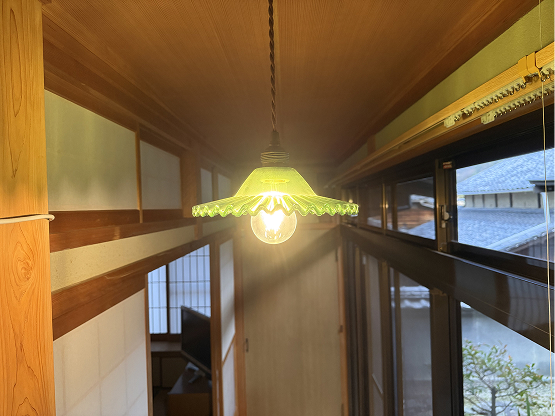
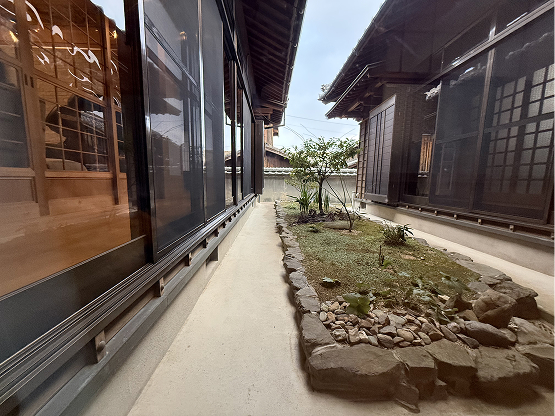
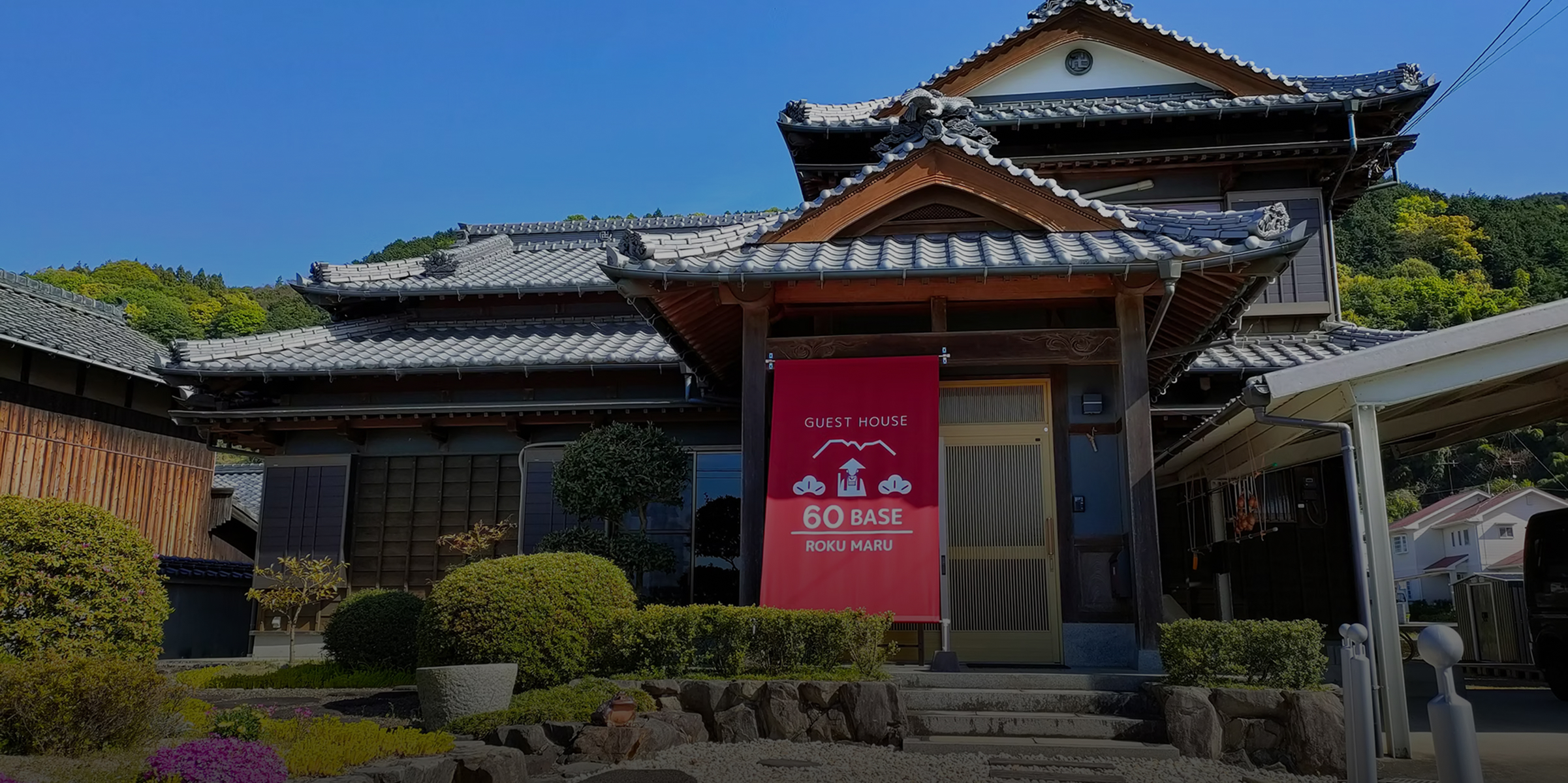
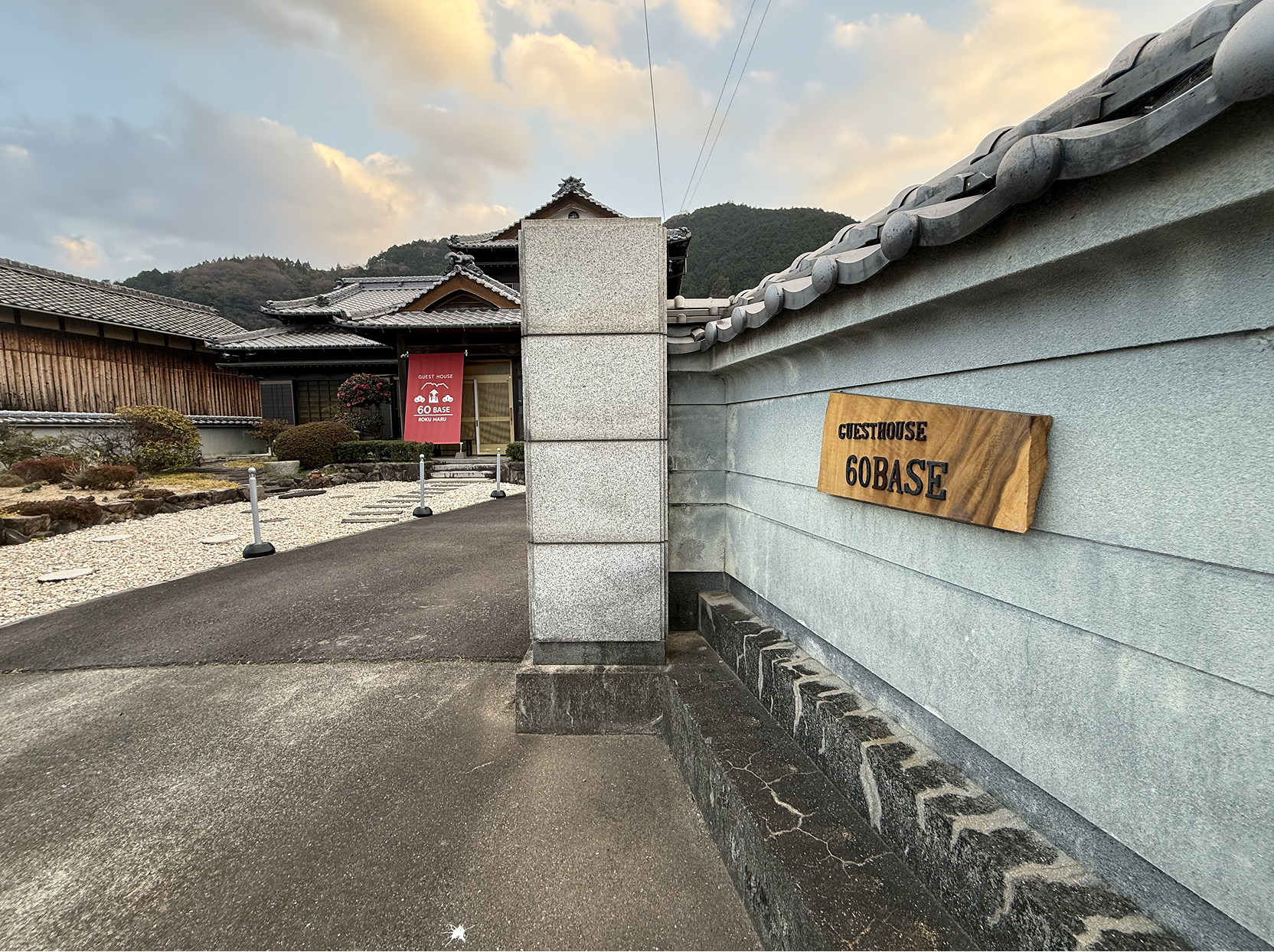
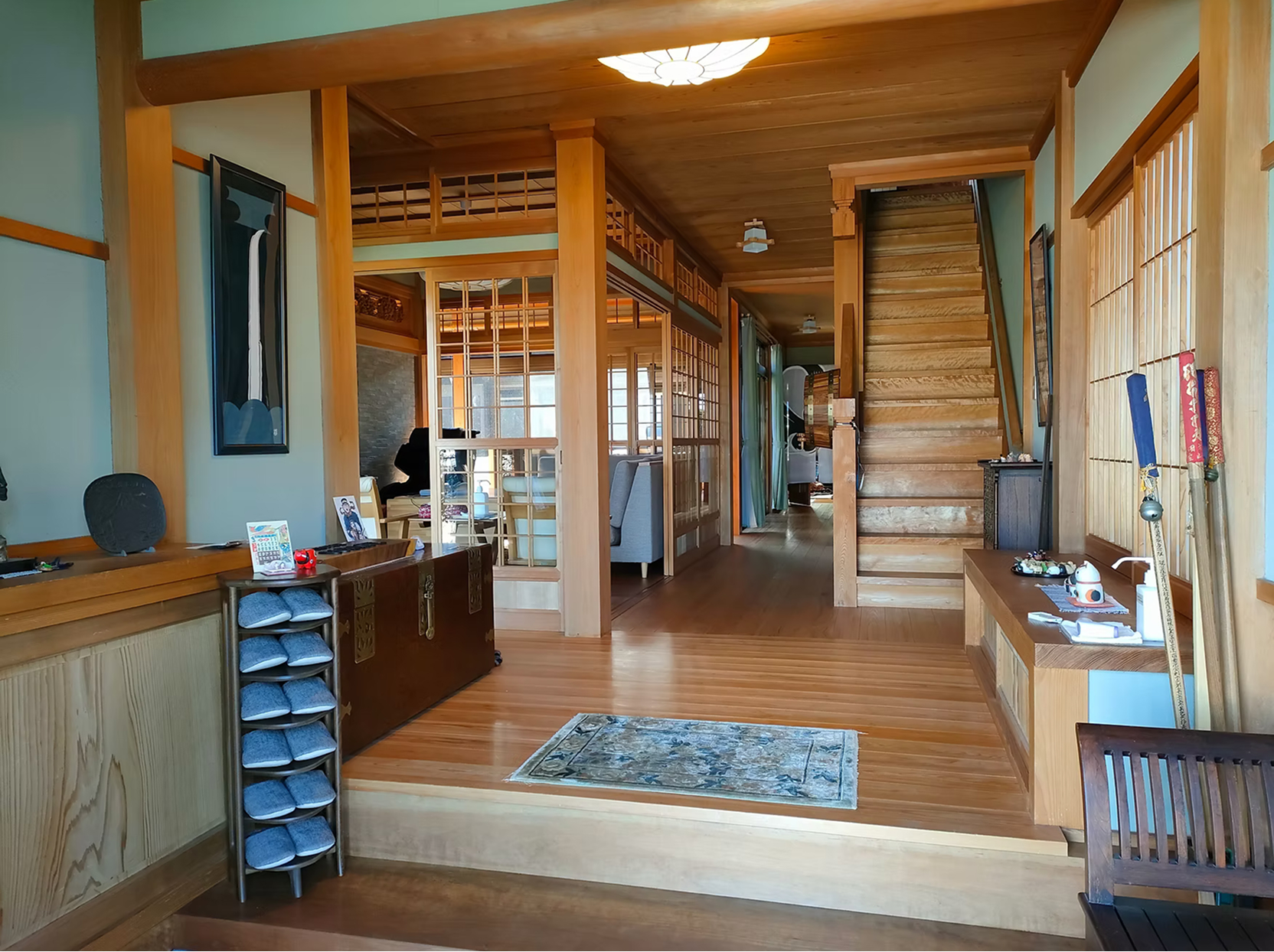
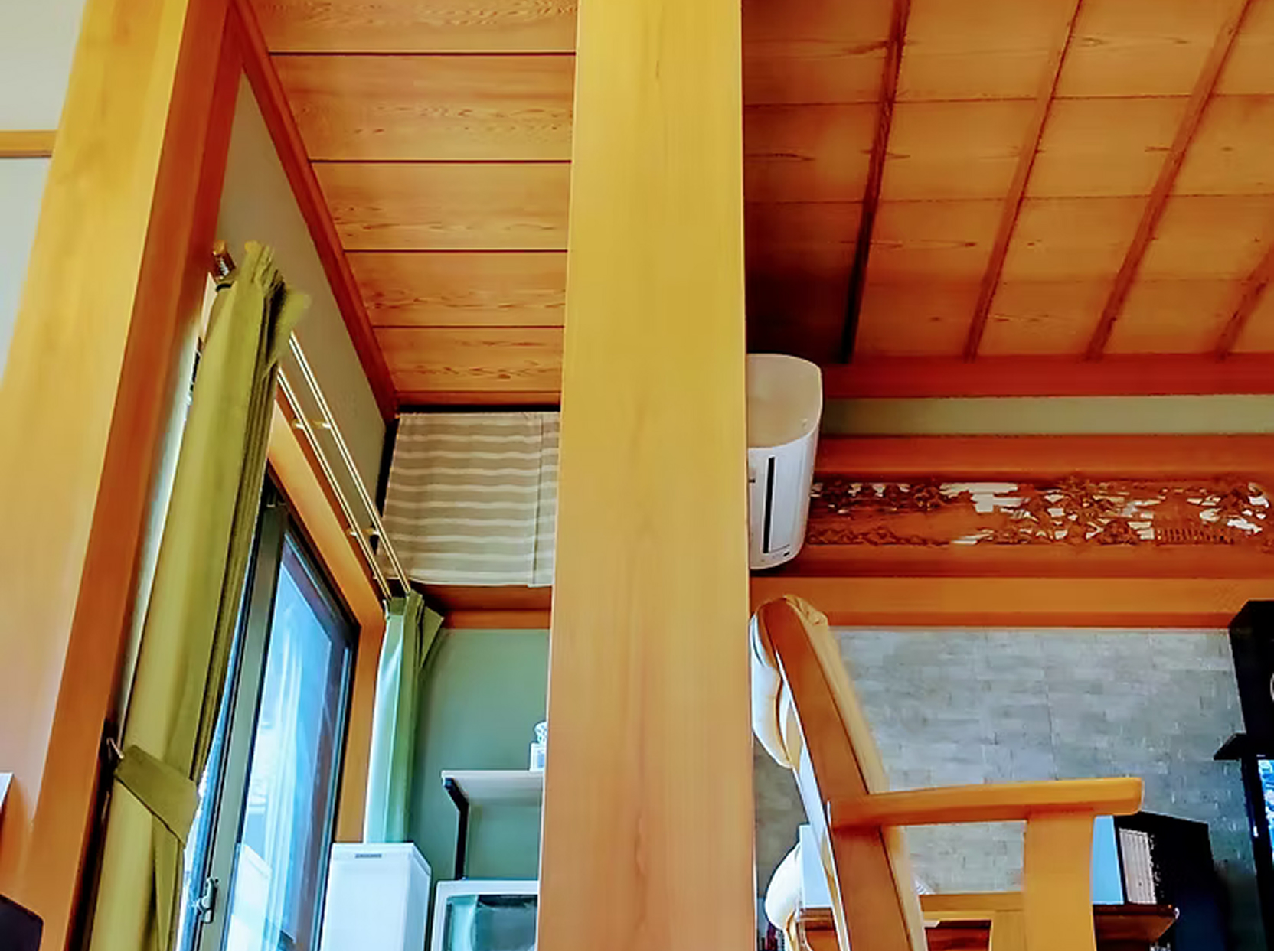
60BASE is a traditional Japanese house built with great care and time by local carpenters using conventional construction methods. The roof is finished with beautifully smoky silver Kikuma tiles. Thick Japanese cypress through-pillars form the core of the house, and even the hallways make generous use of knot-free cypress boards.
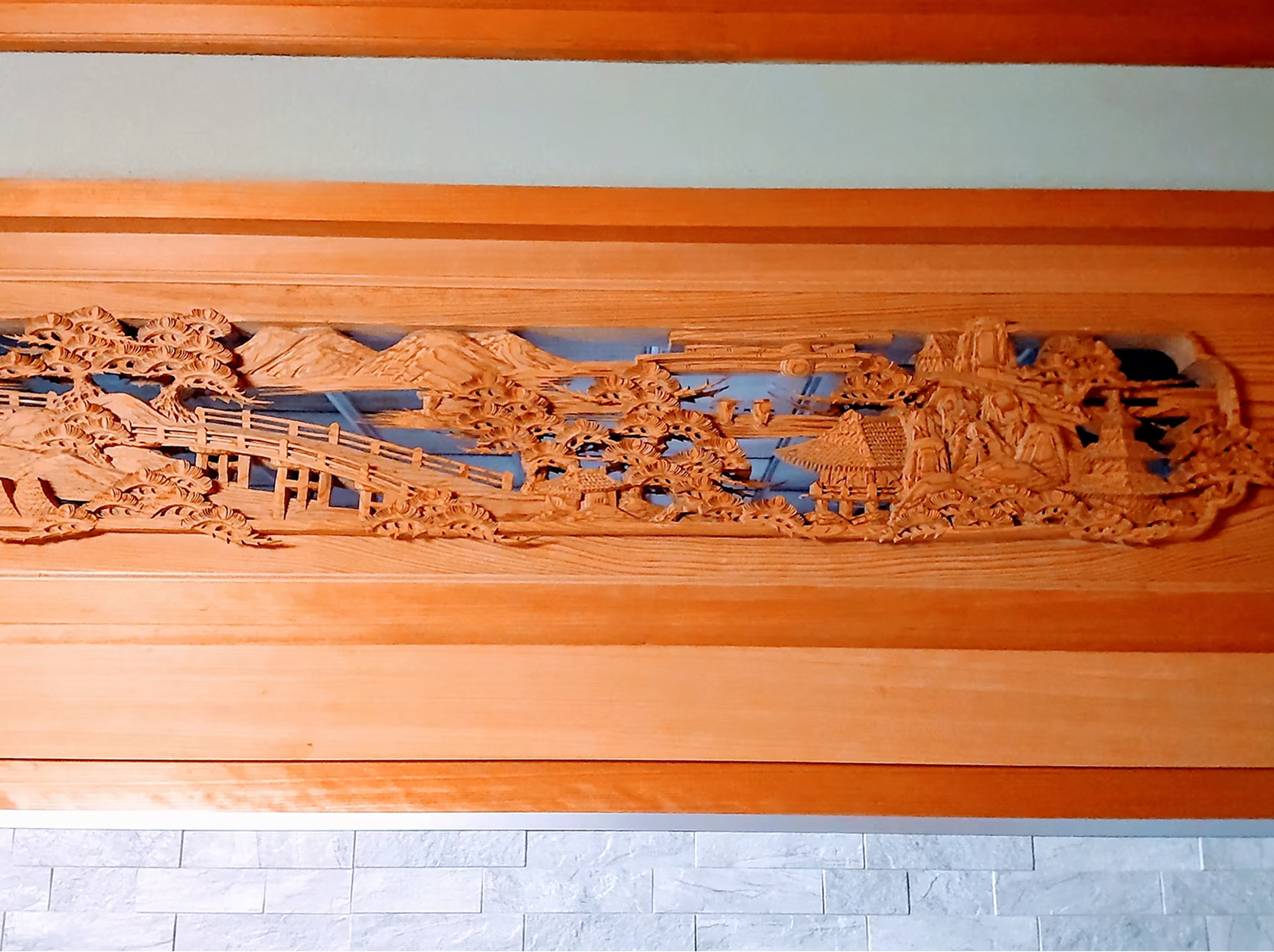
The walls are earthen walls made with a base of split bamboo lattice and straw clay, naturally regulating humidity as if the house itself were breathing, and creating a kind of quiet that gently loosens the body. The ranma transoms with openwork carving, the kumiko lattice shoji screens, and the yukimi shoji — in all these carefully made details that receive light and wind, the beauty of handcraft and the wisdom of Japanese daily life are alive.
This is not simply a building for spending one night. Along the walking pilgrimage, it is a place where you can relax both body and mind, and fully experience the comfort of traditional Japanese architecture, which is becoming increasingly rare.
About Your Stay
Guesthouse 60 BASE
Official website hereCharges
- 1 night with 2 meals
- ¥8,000 / person
- Without meals
- ¥5,000 / person
- ※We do not offer individual meal accommodations such as vegetarian, vegan, or halal options
- ※Children under 7 receive a ¥1,000 discount
Meals
We serve home-style meals made with plenty of freshly harvested vegetables.
- ※The dinner and breakfast at our guesthouse are not extravagant kaiseki cuisine, but rather “local food” made with seasonal homegrown vegetables, Ehime-grown rice, and homemade miso and pickles. Centered on Japanese cuisine, we serve a rotating selection of international dishes as well, such as taro croquettes, Spanish omelet, mapo eggplant, handmade dumplings, and shepherd’s pie.
- ※We also offer a variety of alcoholic drinks to go with your meal, including local sake such as “Sukigokoro” from local brewer Shuto Shuzo.
Check-in / out
- Check-in
- 15:00〜20:00
- Check-out
- Until 10:00
- ※Please be sure to contact us if you expect to arrive late
- ※If you would like to leave your luggage before check-in, please confirm at the time of booking.
Access
799-1106 653-2 Oto Ko, Komatsucho Oto, Saijo City, Ehime Prefecture (Google Maps)
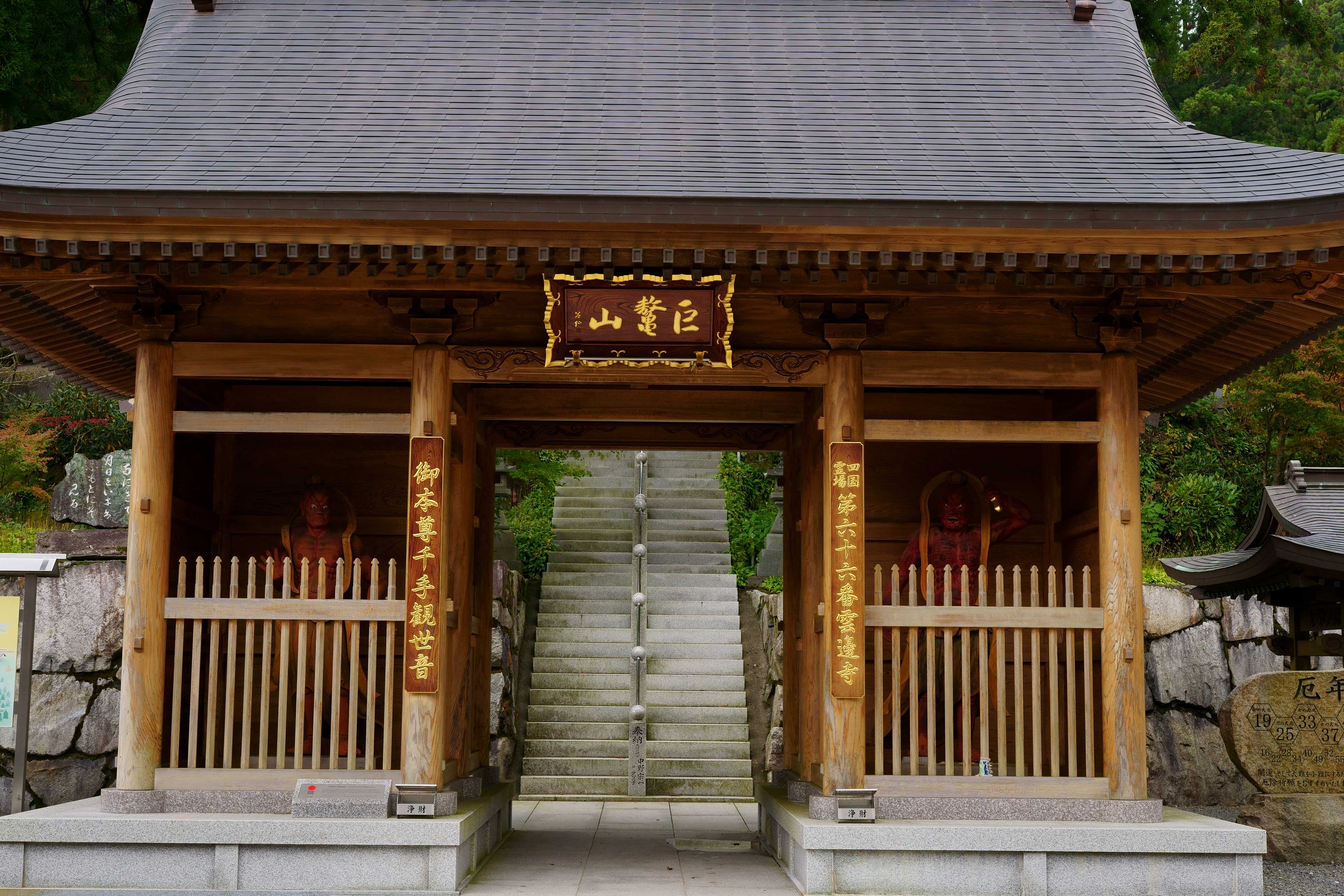
- ・180 minutes on foot from Yokomineji Temple (Temple No. 60)
-
・15 minutes on foot from “Oto” bus stop on the Setouchi Bus line
※Bus services are limited. Please check the latest bus timetable. -
・70 minutes on foot from Iyo-Komatsu Station on the JR Shikoku Yosan
Line
※It is about 5 km to our guesthouse. Free pick-up service is available upon request (subject to consultation). - ・Free parking available (up to 3 cars or motorcycles)
- ・Bicycle parking available (indoors)
Guest room features
Guest Room 1 (1–4 guests: Japanese-style room 18m2)
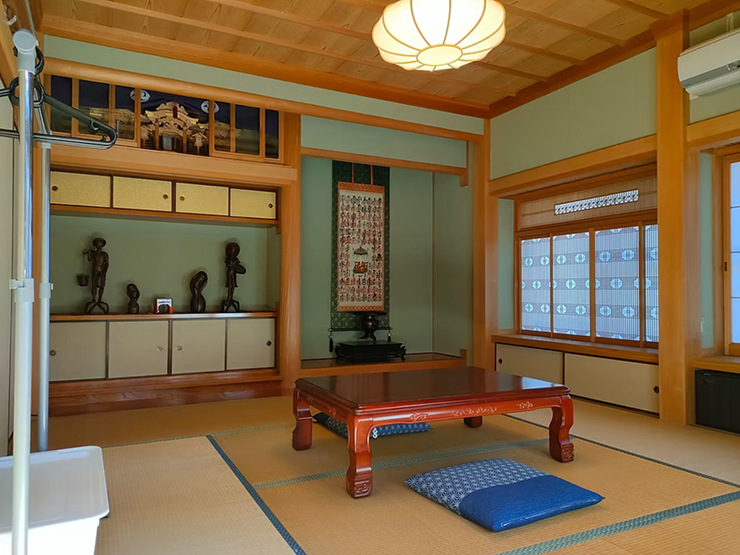
This is a Japanese-style room with tatami flooring in the shoin-zukuri
style.
Its features include a kamidana altar shelf, a tokonoma alcove,
yukimi shoji, and kumiki lattice shoji screens, and the tokobashira post is
made from a polished cedar log.
Guests lay out their own futons and
mattresses.
The room can be locked from the inside. Please keep your
valuables in the safety box in the room.
- 1 night with 2 meals
- ¥8,000 / person
- Without meals
- ¥5,000 / person
Facilities, etc.
Free Wi-Fi, air conditioning, 32-inch TV (digital terrestrial & BS), remote-controlled lighting, safety box, hanger rack
Guest Room 2 (1–2 guests: Japanese-Western room 11m2)
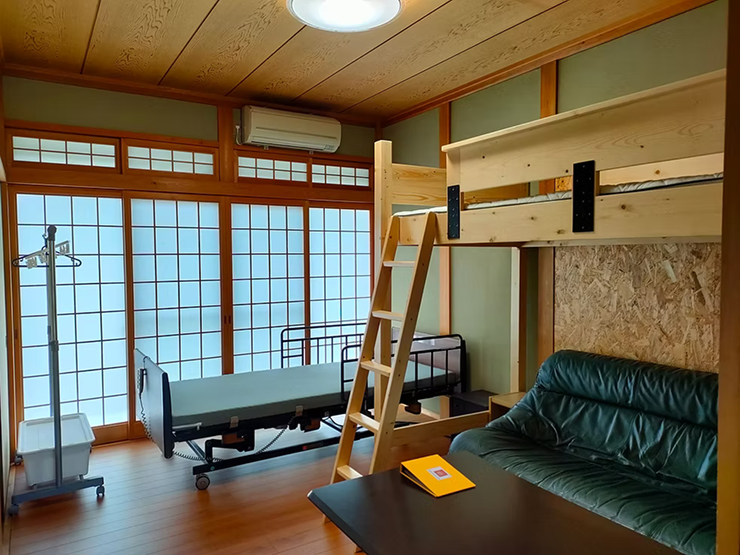
This is a two-bed room with wooden flooring.
Under the loft bed, there
is a sofa and a reading light, and the space can also be used as a simple
workspace.The room can be locked from the inside. Please keep your valuables
in the safety box in the room.
- 1 night with 2 meals
- ¥8,000 / person
- Without meals
- ¥5,000 / person
Facilities, etc.
Free Wi-Fi, air conditioning, 32-inch TV (digital terrestrial & BS), remote-controlled lighting, safety box, hanger rack
Shared spaces & amenities
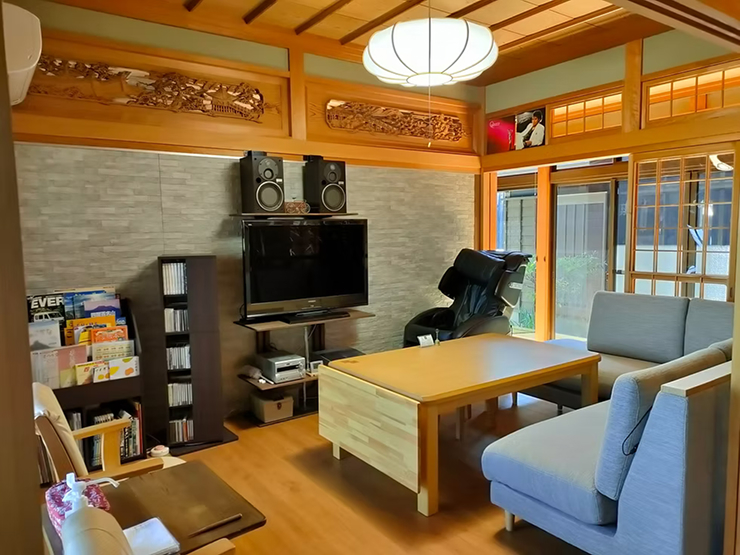
The dining room is a space for meals, coffee, and interaction with others.
Please feel free to use it during your stay.
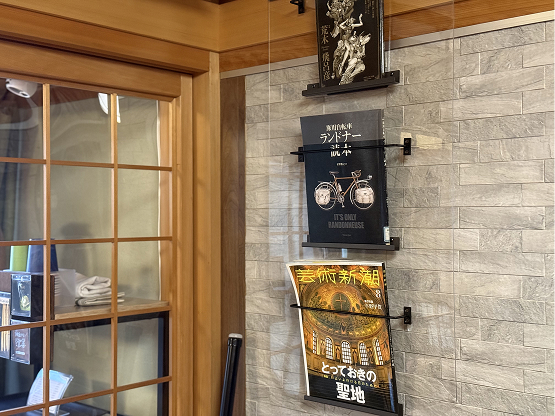
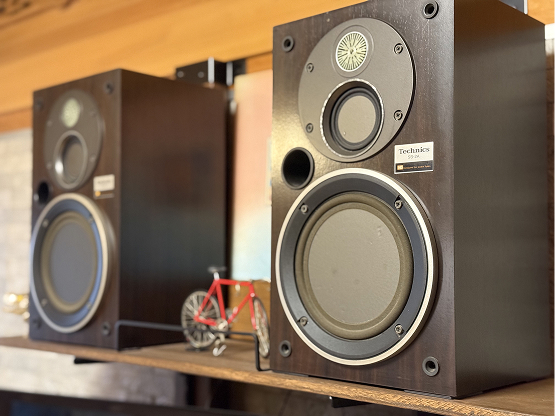
Use of the TV, audio
system, video games, books, magazines, and massage chair is also free of
charge.
The bath is used on a rotating basis. For hygiene management, please follow the bathing rules set by our guesthouse and soothe the fatigue of your journey.The toilet has a heated seat and
washing functions, and there is one shared toilet for all genders. Please
use it considerately.
Free services & amenities
Free Wi-Fi, microwave, refrigerator, drink bar (coffee, tea, Japanese
tea), rental face towels, hair dryer, shampoo, conditioner, body soap
Rental
bicycles for shopping (2 available)
Paid services & amenities
Washing machine (¥100 per use, detergent included), toothbrush (¥100), razor (¥100), roomwear rental (¥500 / limited to 2 sets)
Facilities and services for international pilgrims
Free Wi-Fi
High-speed internet available in all rooms
Microwave
Available for warming your meals
Drink bar
Coffee, tea, and Japanese tea are available
Hair dryer, shampoo, conditioner, body soap
Available free of charge
Roomwear rental
¥500 / limited to 2 sets
English support
Simple English and multilingual conversation via translation devices available
Multilingual guidance
The official website is available in English
Credit cards
Major credit card companies and domestic code payments accepted
Refrigerator
You may keep brought-in drinks and other items chilled
Face towels
Available to rent free of charge
Toothbrushes and razors
Sold for ¥100 each
Laundry facilities
Fully automatic washing machine available (¥100 per use, detergent included), no dryer
Luggage storage
Luggage storage available (inquiry required), no delivery service
Rental bicycles for shopping
2 bicycles available
To all our guests:
The dining room is a space for meals, coffee, and interaction with others.
Please feel free to use it during your stay.
Use of the TV, audio
system, video games, books, magazines, and massage chair is also free of
charge.
The bath is used on a rotating basis. For hygiene management,
please follow the bathing rules set by our guesthouse and soothe the
fatigue of your journey.
The toilet has a heated seat and washing
functions, and there is one shared toilet for all genders. Please use it
considerately.
Deepen Your Experience
Nearby highlights
Yokomineji Temple (Temple No. 60)
A sacred place of Ishizuchi mountain ascetic practice, with magnificent rhododendron flowers in the temple grounds.
About 180 minutes on foot About 40 minutes by carShu-chan Hiroba
A large-scale farmers’ market bustling with local customers, one of the biggest in Shikoku. Seasonal vegetables, fruit, fish, and more are available
About 15 minutes by carSaijo’s famous spring water, “Uchinuki”
Abundant underground water from the Ishizuchi mountain range springs naturally throughout the city. You can enjoy it for free
About 30 minutes by carInformation on farm experiences
- Seasonal vegetable cultivation and harvesting experience (¥1,000 / person)
- Easy smoked food experience (¥1,500 / session)
-
Barbecue experience using harvested vegetables (¥1,500 / person)
※ Freshly harvested vegetables can either be taken home with you or served as part of your meal.The content of the program can be adjusted according to your wishes and the state of cultivation, so please contact us for details.
Photo gallery