The Story Held In the Guesthouse
Reviving History: A Passionate Effort to Restore a Pilgrims’ Inn
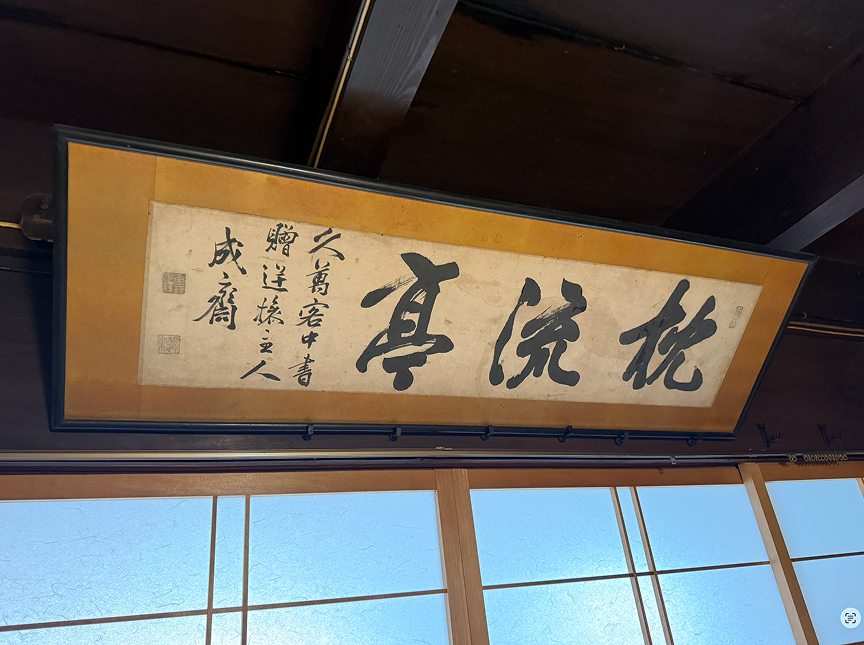
The history of Chinryutei Omogo Ryokan began in the first year of Meiji (1868), the very year Japan set out on its path toward modernization.Its elegant name, “Chinryutei,” comes from a piece of calligraphy (a framed inscription) that remains at the inn. Shigeno Seisai (重野成斎), a leading historian and scholar of Chinese classics in the Meiji era, known for introducing modern historical research methods to Japan, once stayed here. He described his stay as “an elegant experience, as if resting with the sound of the river as my pillow,” and wrote the words “Chin-ryu” (pillow-flow) to express that feeling, presenting them to the innkeeper.
Once a traditional Japanese restaurant, and later a place of rest for travelers and pilgrims along the Tosa Kaido road. This inn—just a 10-minute walk from Temple No. 44, Daihoji, the nearest lodging to this sacred site—was cherished for many years. However, it could not withstand the pandemic and the aging society, and at one point its long history came to a close. Now, under a new owner, this place is beginning to breathe again.
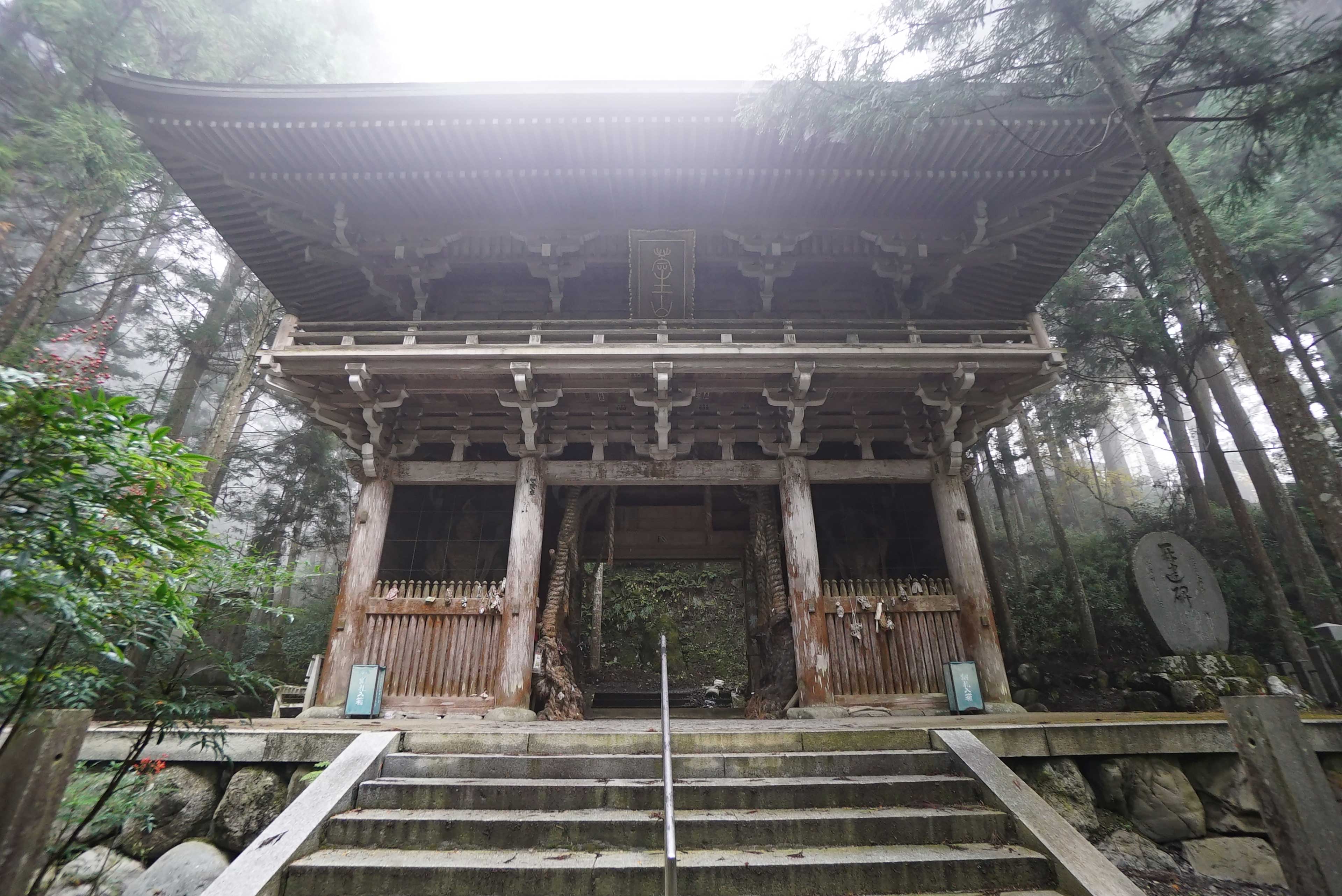
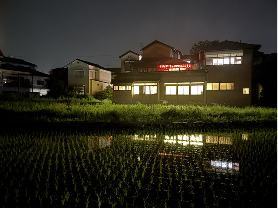
Omogo Ryokan quietly stands along a street that still retains the atmosphere of an old post town. It may at first glance appear to be nothing more than a modest, ordinary house. But once you step inside, that impression will be pleasantly overturned. A vast interior stretching deep within, three intricately connected floors—it is like a labyrinth. Meiji, Taisho, Showa. Its complex structure, created through repeated extensions over time, invites visitors on a journey through Japanese architectural history, like a panorama that carries them through time.
Creating something that is more than just a place to stay—that is my challenge. It is currently open free of charge, but this is also a crossroads where cultures from around the world come together. Please share the tastes of your home in the kitchen, and tell us the stories of your journey. Encounters with people like you, from many different backgrounds, are the greatest treasure of this inn.
The Owner’s Thoughts and Philosophy
As I approached the halfway point of life at age fifty, I suddenly found myself stopping to reflect. I had spent so many years in the world of IT consulting. It was stimulating, but I felt a growing desire to devote the rest of my life to something more essential—to working hard for the good of society, and to connecting heart-to-heart with people from all over the world.
At first, I planned to restore a traditional townhouse in Kyoto. But what I saw there was not the Japan I had been searching for. Overtourism had swept everything up, and wherever I went, there were people, people, people. The “silence” a traveler needs in order to face oneself, and the gentle flow of time, had disappeared. Perhaps the “real Japan” could no longer be found in tourist destinations.
I wanted guests to experience authentic, unadorned Japanese culture and the overwhelming beauty of nature. That search led me here, to Kumakogen Town. By chance, this is also very near Daihoji, Temple No. 44 of the Pilgrimage. It is exactly the halfway point of the long pilgrimage journey.
As someone reaching the turning point of life, I could not help but feel fate in being drawn to this place, which is also the turning point of the pilgrimage. This is a place to stop once, steady your breathing, and begin walking again. Here, you’ll find crisp, clear air unlike the hustle and bustle of other tourist spots.
A Sacred Place in the Process of Renewal: You, Too, Can Become Part of Its Story
What makes the Shikoku Pilgrimage special is osettai. Along the roadside, local people may hand you a mandarin orange, sweets, or tea, saying, “Please keep going.” This is not charity. It is an expression of respect and prayer for pilgrims. By encountering selfless love from strangers, you will find the courage to keep walking.
And yet today, many inns that have supported the history of the pilgrimage are quietly closing their doors because of aging buildings and financial hardship. The old custom of “just wanting a cheap place to stay” is undermining the sustainability of the sustainability of these inns. We want to stop this trend. The rebuilding of Omogo Ryokan is not simply a repair project. It is a grand challenge to revive this inn as a high-value sanctuary where pilgrims can deeply heal both body and mind, and to pass this culture on to the next generation.
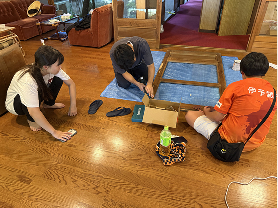
At present, we are in the middle of major safety investments and renovation work in preparation for an official opening. So we would like to make you a special proposal. Only now can you witness this process of renewal. Until the official opening, we invite you not as a “guest,” but as a “partner in rebuilding,” free of charge.
There is no charge. Instead, please lend a hand in giving new life to traditional Japanese architecture—help with restoration work, cook and share meals with local people, and tell us the stories of your journey. This is not simply a labor exchange. It is participation in history. Laughing with local people and working together side by side will become a deep experience of blending into the everyday life of the pilgrimage, something you could never know by simply passing through.
This is the halfway point of a long journey. A hideaway where you can stop walking for a while and face yourself. Our dream, and your participation, can turn this place into a light for future pilgrims. Please come and inscribe your name on a page of our story.
Heartwarming episodes with pilgrims
- Shopping experience at a Japanese supermarket
- Lukas, a graduate student studying forestry, prepared a Spanish omelet for us. When he went shopping with local university students at a nearby supermarket, he was thrilled to discover foods unique to Japan. Together, we enjoyed a moment of ordinary Japanese daily life.
- Talking together about the differences and characteristics of Italian and Japanese culture
- Nico, a young plant engineer, said at a nearby restaurant that he hesitated to pay for an inn just to sleep, and that led to our inn being introduced to him. Until late at night, we all talked about the cultures of each country, and it became a truly special night.
About Your Stay
Chinryutei Omogo Ryokan
Charges
- Without meals
- ¥0 (Complimentary)
- ※We are not yet a hotel. At present, this is a "private space" undergoing restoration work in preparation for an official opening. For that reason, we cannot provide services as a legally registered accommodation, but we warmly welcome you as a friend.
- ※Instead of money, please lend us your help. We do not charge for accommodation. In return, please take part in the rebuilding of this place in your own way—help with cleaning or repairs, assist with preparing meals, or share the story of your journey. That is the currency here.
Meals
Kitchen is available for free of charge.
Dining: The Kitchen is the Heart of Our Ryokan.- ※There are no fixed meals served at set times here. Instead, there is freedom and interaction. Our kitchen is yours. Why not cook Japanese home-style dishes with us using fresh local vegetables, or teach us the tastes of your own hometown? The time spent talking around the table is the main dish at Omogo Ryokan.
- ※There are several restaurants nearby, and we would be happy to introduce them to you.
Check-in / Check-out
- Check-in
- 15:00〜18:00
- Check-out
- 〜10:00
- ※Please be sure to contact us if you will arrive late.
- ※If you would like to leave your luggage before check-in, please confirm at the time of booking.
Access
791-1201
348 Kuma, Kumakogen-cho, Kamiukena-gun, Ehime Prefecture (Google
Maps)(Google Maps)
- ・10 minutes on foot from Daihoji Temple (Temple No. 44)
- ・5 minutes from the JR Bus “Kumakogencho” stop
- ・Parking available (free, 1 car)
Room Features
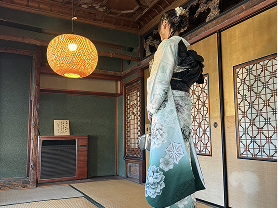
Meiji Room (1–3 guests: approx. 18m2)
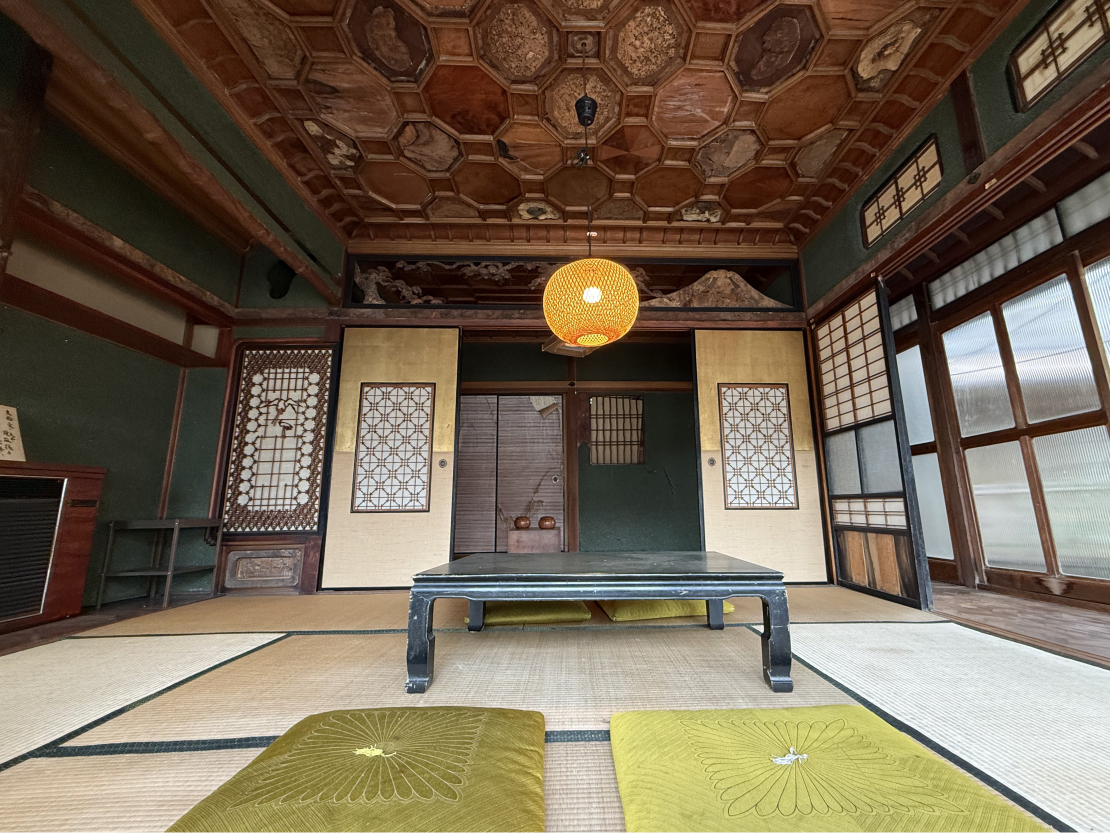
Built in 1868, the first year of Meiji—-
this is the most historic room
in the inn, a space that has carried the deepest passage of time.
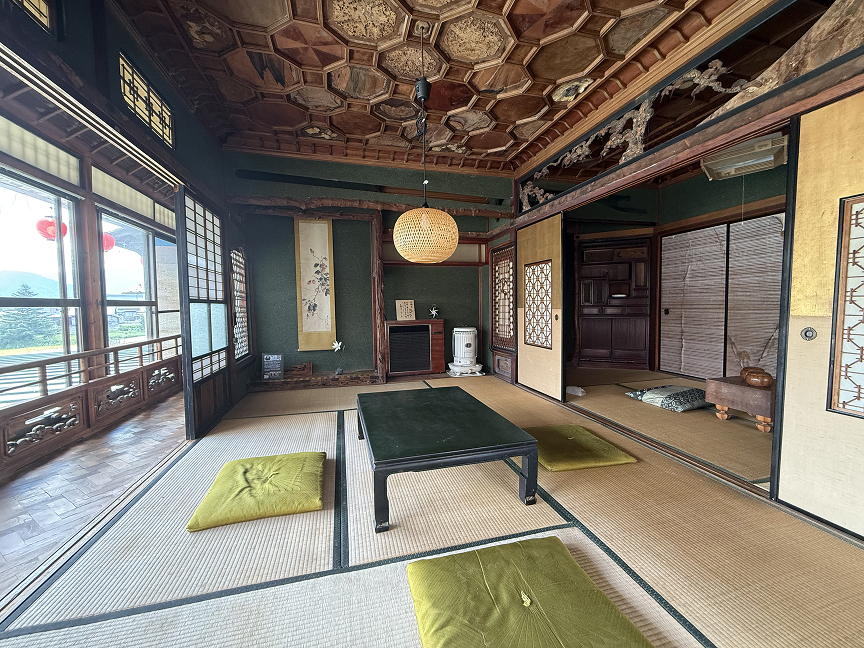
Originally designed as a refined dining room, it welcomed many people who gathered around the blessings of the seasons. If you look up at the ceiling, you will see a coffered ceiling made with eight kinds of fine Japanese wood. The quiet harmony created by the grain and tones of the wood still conveys the aesthetic sense and craftsmanship of the artisans of that time.
Even after 150 years, the strength of the materials and the design philosophy remain alive.
Here, you do not simply “stay”; you place yourself within the atmosphere of Meiji-era life. With all five senses, experience the beauty and spirit of Japanese architecture handed down across time.
Do not simply look at history—step inside it.We invite you to enjoy that experience in this room.
Takano Room (1–5 guests: approx. 22m2)
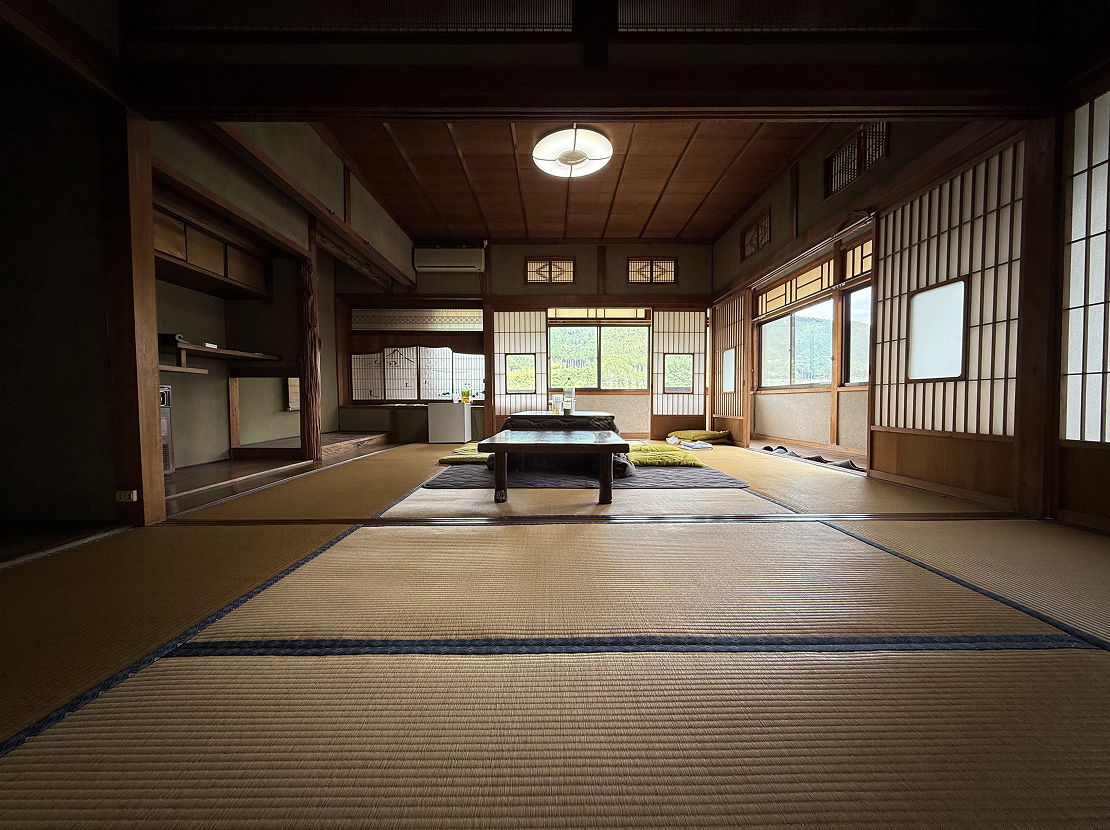
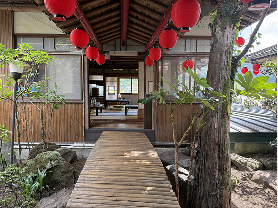
What appears at the end of a slow walk across a wooden bridge is a detached wing added in 1958.
A little away from the main building, this space is softly shielded from its surroundings, and was once prepared to welcome special guests.
During the years when Japan was beginning its period of rapid economic growth, it was also used as a place for important meetings where people spoke of the future. Quiet tension and hope intersected.
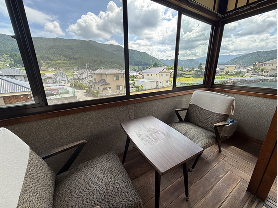
Beyond the large open windows lies the clear air of Kumakogen and mountain scenery that changes with the seasons. In the distance, you can also sense the rhythms of daily life, and the landscape where nature and living blend together unfolds like a painting.
From the moment you cross the bridge, time and atmosphere begin to shift gently. This detached house is a quiet and rich place where you can step softly away from everyday life and face yourself.
Hinoki Room, Sugi Room, Matsu Room(Each for 1–2 guests: approx. 14m2)
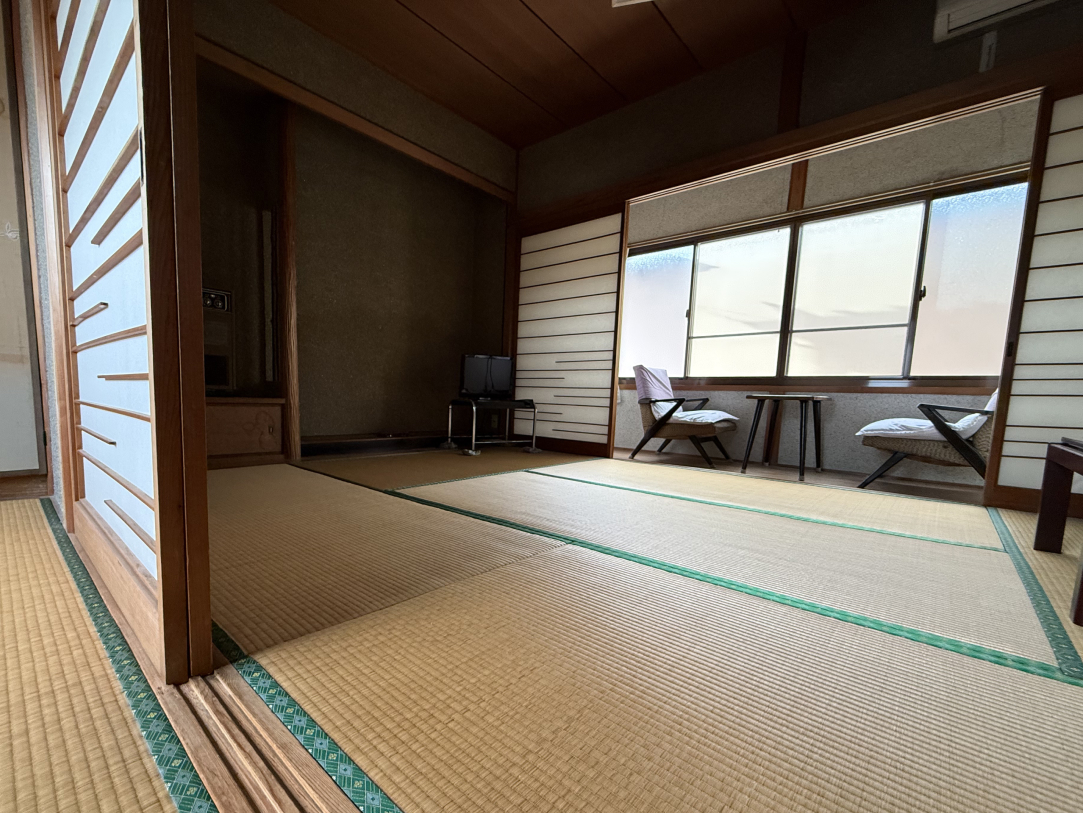
Three private rooms thoughtfully designed to value privacy.
True to
their names, these rooms are themed around hinoki cypress, cedar (Sugi), and
pine (Matsu)—trees that represent Japan. Carefully selected wood is alive
throughout each space.
Once you close the door, you enter a small, serene world reminiscent of a tea room. Wrapped in the scent of wood, you may wish to relax your body after a long day of walking, or quietly reflect on the pilgrimage route and the encounters of your journey.
Because these rooms are filled with simplicity, there is no single way to spend your time. Only those who stay here can carve out their own time. This is a place of serene tranquility.
Tilted Room (1 guest: approx. 8m2)
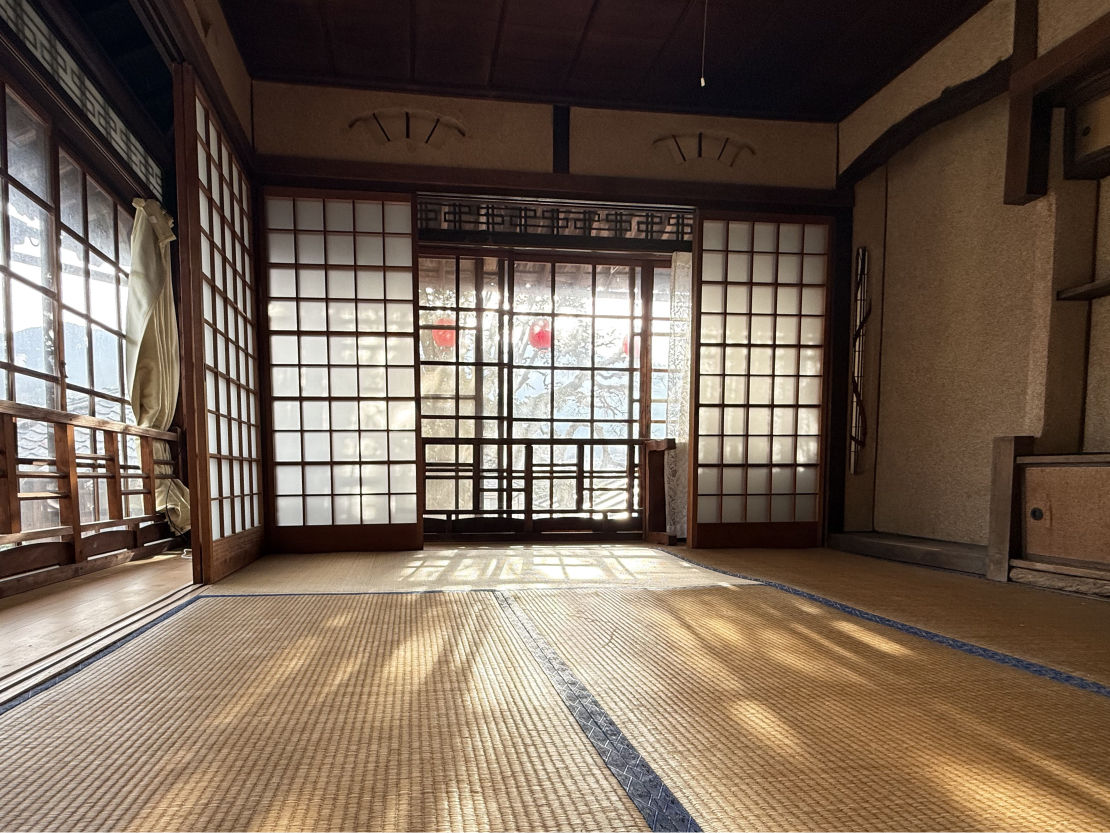
Our inn stands in harmony with sloping terrain. This room, arranged along the hillside, has a floor that tilts, creating a space with a slightly unreal character.
From its two windows, you can look out over the inner garden, where light and shadow shift softly over time. The room’s design avoids excessive decoration and is devoted instead to a delicate, restrained aesthetic. Quietly alive within it is the Japanese sense of wabi-sabi.
A small sense of unfamiliarity awakens the senses. Spend some time turning your attention inward as you enjoy the unique atmosphere of this space. It is a modest little room of "adventure", especially for those who travel with curiosity.
Great Hall (5–10 guests: approx. 33m2)
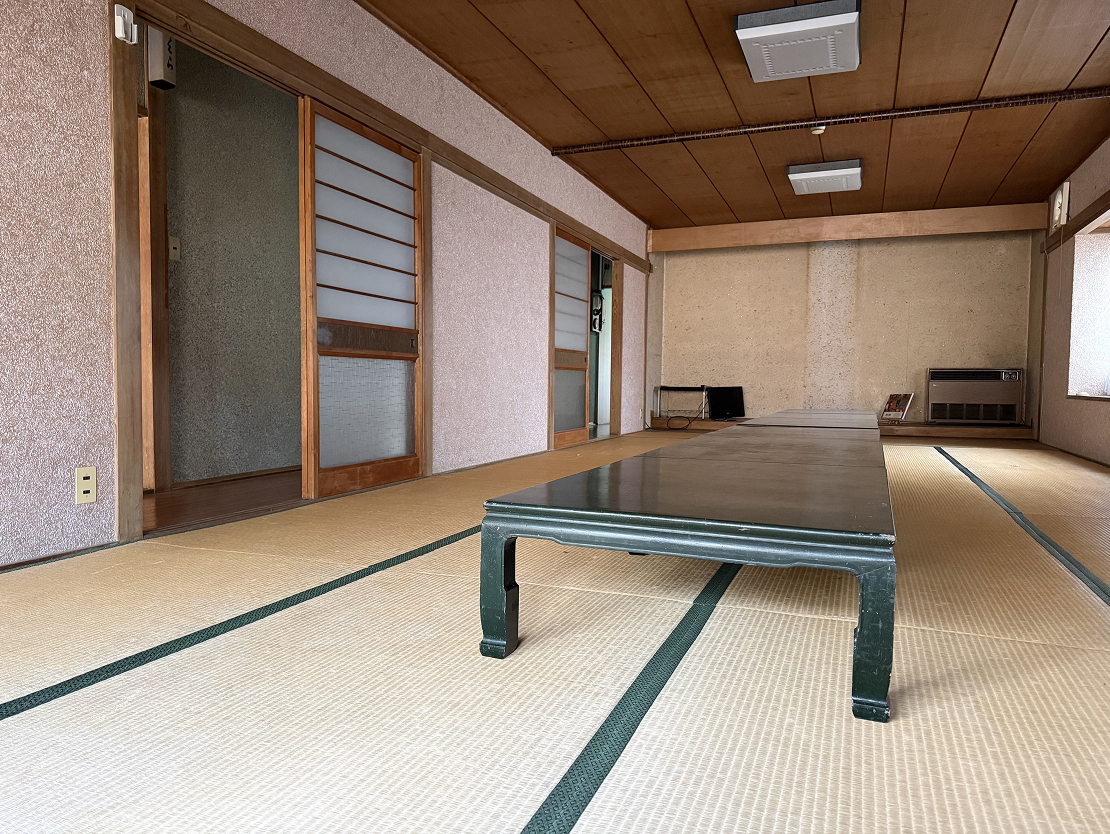
Among the seven guest rooms on the top floor, this is the one with the greatest sense of spaciousness.
Its open, unpartitioned layout still carries traces of the days when this building served as a pilgrims’ inn.
As the phrase “once-in-a-lifetime encounter” (Ichigo-Ichi'e) suggests, travelers who met along the road would share meals, conversations, and sleep, regardless of age or status, before going their separate ways again. In that space lived the Japanese spirit of valuing chance encounters and cherishing human connection.
Today, while inheriting that open atmosphere, we recommend this room as a place for families and close companions to relax and talk together at ease.
Spaciousness allows even the distances in our hearts to feel more open.We hope the time you spend here will become a moment that allows you to once again feel the value of encounter.
Common Area: Lobby
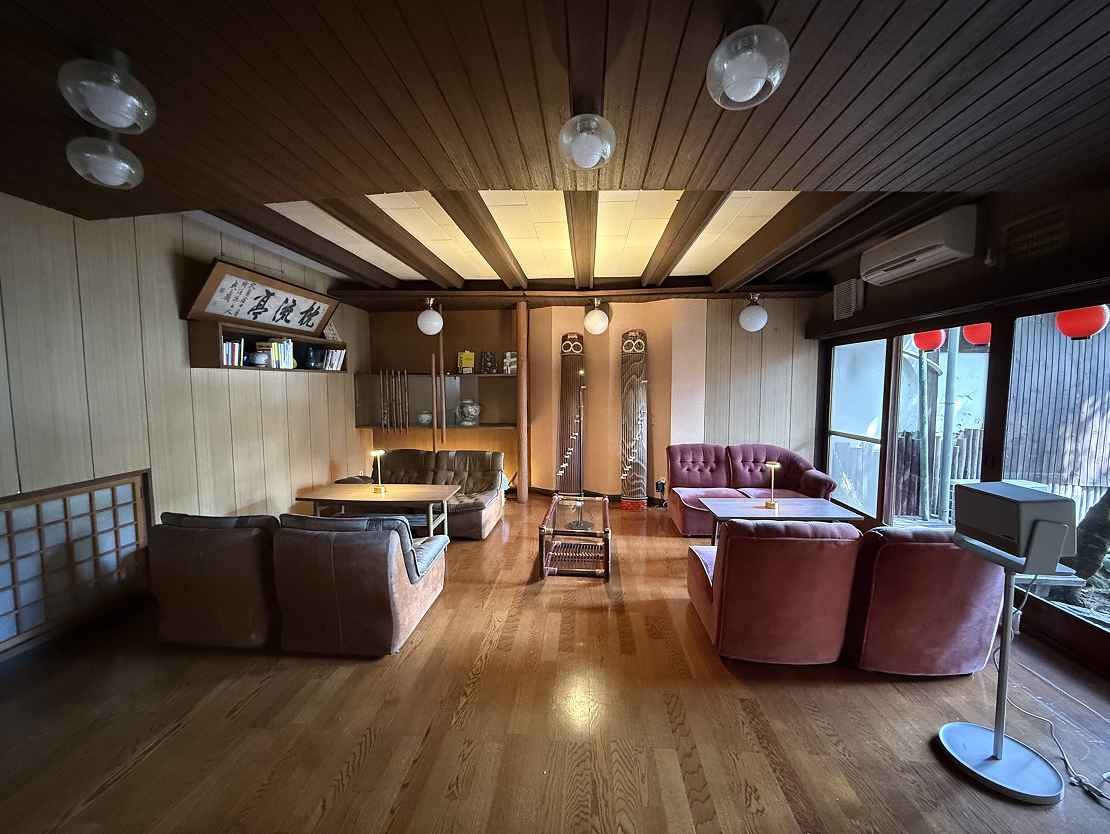
The 1960s――
a time when everyday life in Japan was beginning to change
dramatically in the midst of rapid economic growth.
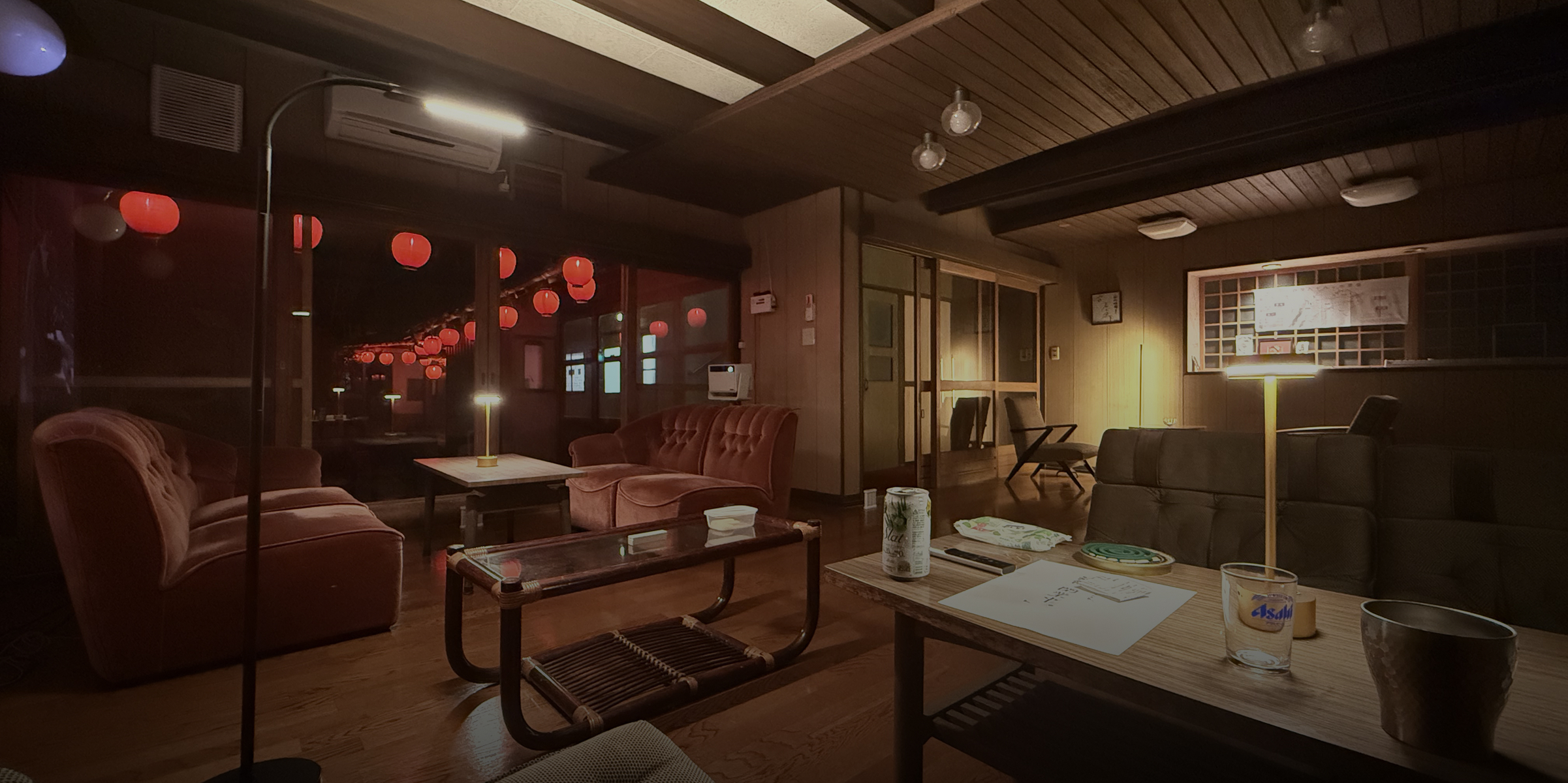
The architect of that time quietly layered both a longing for Western lifestyle and the emerging atmosphere of café culture in Japan into this space. Although built on Japanese materials and composition, it has a modern, light feel. Its distinctive presence is unique to a Japanese-Western fusion style. You can sense the unique warmth that could only have emerged in that era.
From the large windows, you can take in the greenery of the inner garden. Soft light pours in and gently loosens the flow of time. When you place yourself here, your thoughts will naturally turn to how people once dreamed of new ways of living amid the changing times.
A moment to pause during your journey.
Please spend time here as a
place to sit quietly and feel the changing aesthetics of Japan across the
ages.
Shared Space: Grand Banquet Hall
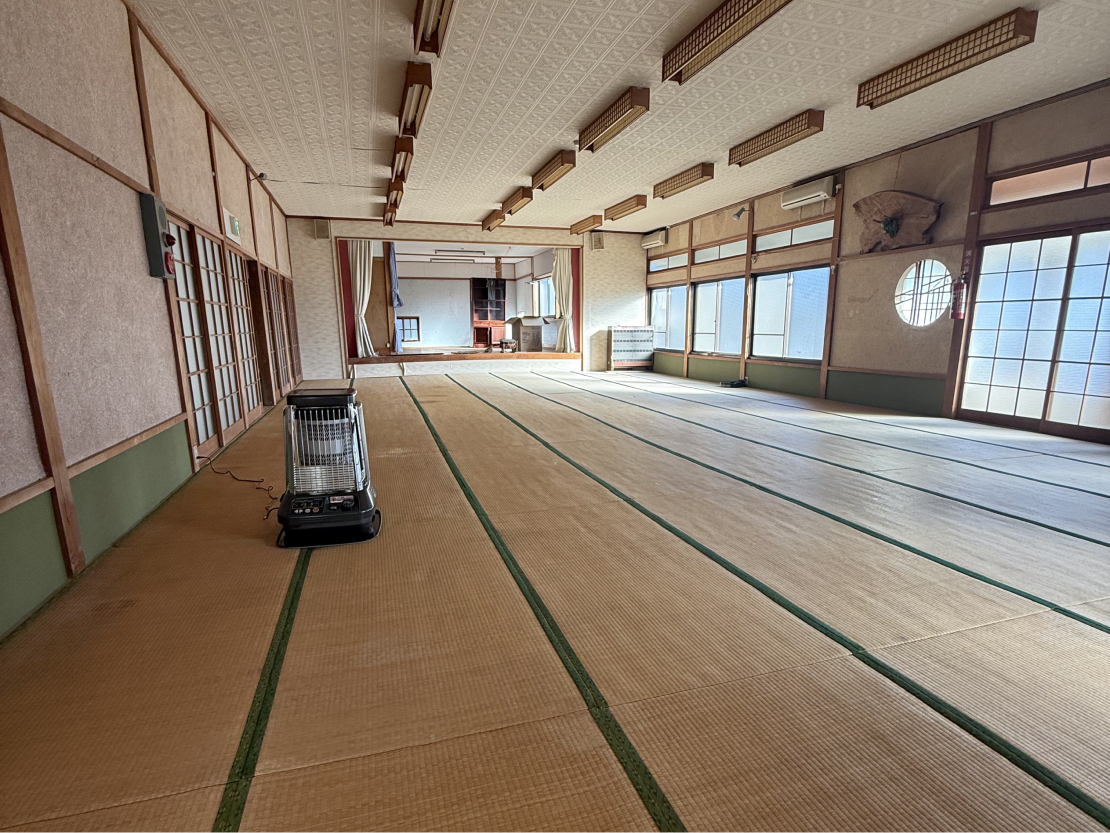
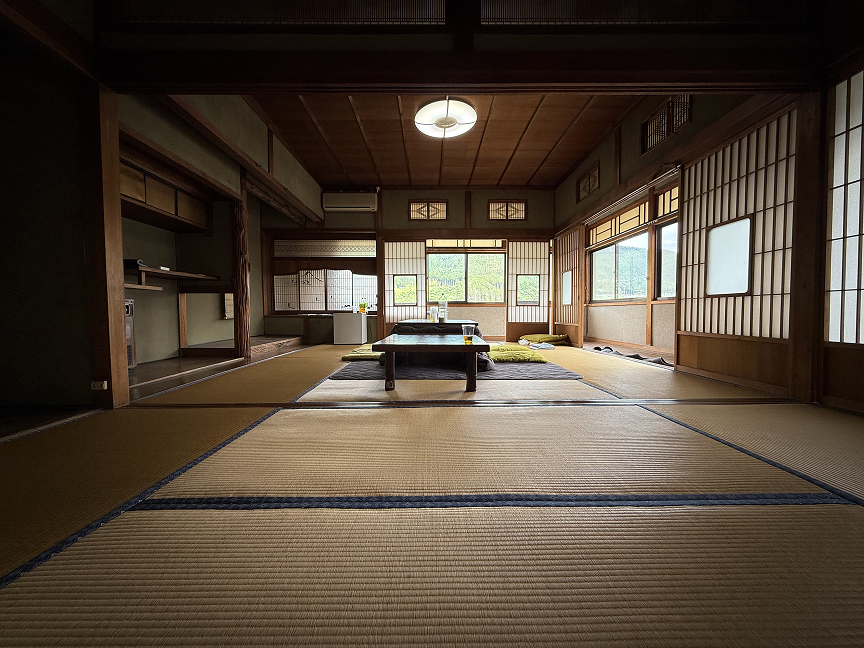
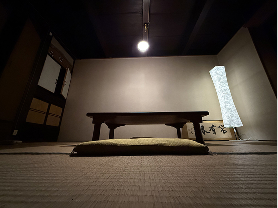
This large hall is approximately 102 square meters in size. It was once the setting for banquets hosting nearly one hundred guests during the time when Kumakogen Town thrived through forestry.
It is truly a space that holds the story of the region, layered with memories of the town’s prosperity and the smiles of its people.
Today, it has been transformed into a space evoking the quiet atmosphere of a dojo.
Its open tatami-covered space conveys the clean beauty of Japanese architecture, stripped of all excess. If you practice zen or meditation here in the clear early morning air, your mind and breathing will settle. The first step of your day’s journey will surely feel all the more pure.
The memory of lively gatherings, and the stillness of the present.
Why
not spend a moment here restoring your inner balance in a place that holds
both?
Facilities and services for international pilgrims
Free Wi-Fi
High-speed internet available in all rooms
English support
Simple English and multilingual communication via translation devices available
Credit cards
Cash only (convenience store ATM nearby)
Laundry facilities
Washer-dryer available (¥200 / use)
Luggage storage
Luggage forwarding service available to your next accommodation (inquiry required)
For first-time pilgrims:
If there is anything you are unsure about—pilgrimage etiquette, the route to the next temple, or anything else—please feel free to ask. We will be happy to guide you.
Deepen Your Experience
Nearby Highlights
Iwayaji Temple (Temple No. 45)
A natural attraction surrounded by rocky mountains, regarded as a training ground of Daihoji Temple, Temple No. 44
About 20 minutes by carThe townscape of Kuma
A town that still retains the charm of old-fashioned shops. Meeting local people is also one of the joys of the pilgrimage.
2 minutes on footShikoku Karst
The 360-degree great panorama known as the “Road in the Sky” is famous for its magnificent scenery and grazing cattle.
About 60 minutes by carInformation on Cultural Experiences
-
Preserving traditional Japanese architecture to the future.
Our inn is now in the midst of renewal, restoring a building that has lived through 150 years so it can be passed on to the next generation.This is not simply repair work. It is the act of passing on the baton of history.
Supporting beams, repairing walls, working with wood.。As you experience the traditional Japanese building methods handed down by earlier carpenters, you can help shape the future of this space with your own hands. The time spent working up a sweat, surrounded by the scent of wood, and working together with others will become a truly irreplaceable experience, going far beyond the idea of an ordinary stay.
This vast building needs many hands. Each small contribution will, in time, become a great force of renewal.
Do not simply stay here—become part of the story.Please join us as a companion in creating this place, and witness the moment it steps into a new era.
- Zazen experience (at Daihoji and Iwayaji, reservation required)
- Sutra-copying experience (at the inn, materials fee ¥500)
- Grape-picking experience (late August to mid-October: separate reservation required at Takemori Garden)
- Tours led by the unique local guides of Kumakogen Town (separate reservation required via the “Tabi wa Hitomakase” website)
Photo Gallery
Interview video

More henro inn interviews
-
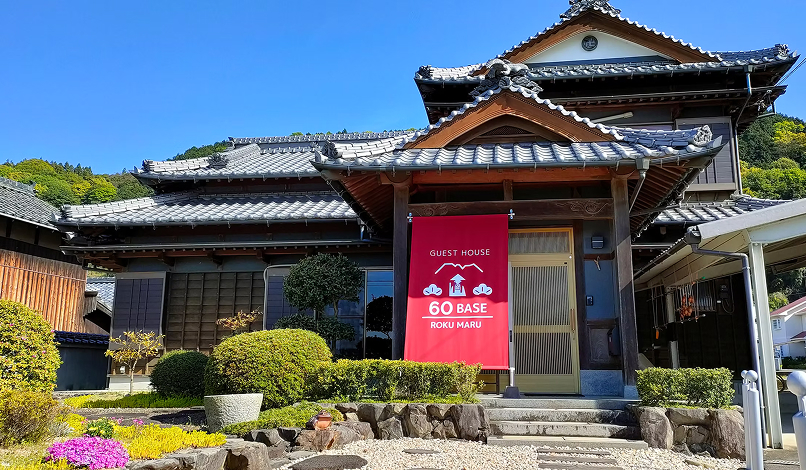
Guesthouse 60 BASE - Near Temple No. 60, Yokomineji
A plate from the home garden and time spent in conversation—an inn that passes the spirit of osettai on to the next generation
Read the article
-
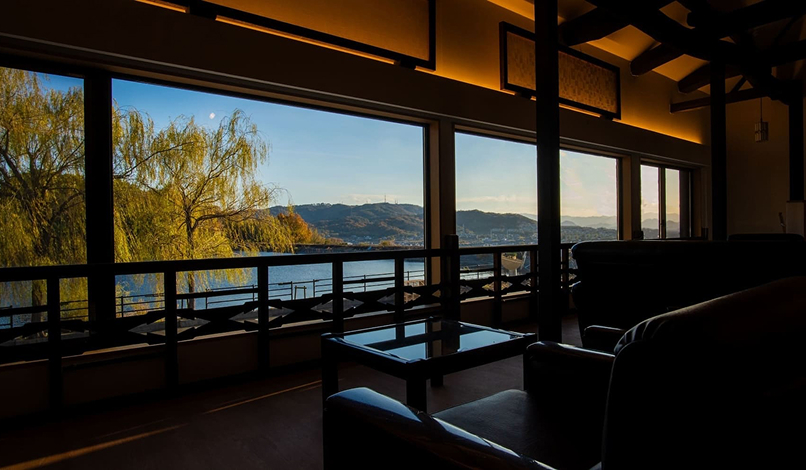
Oyado Takayanagi - Near Temple No. 85, Yakuirji
Carrying a 220-year-old legacy and weaving Kukai’s philosophy into the present—an inn that welcomes the world through art and intellect
Read the article