The story of this place
400 years since Kobo Daishi discovered the hot spring. The history of “Ekiroji”, designated by the domain, has been passed down.
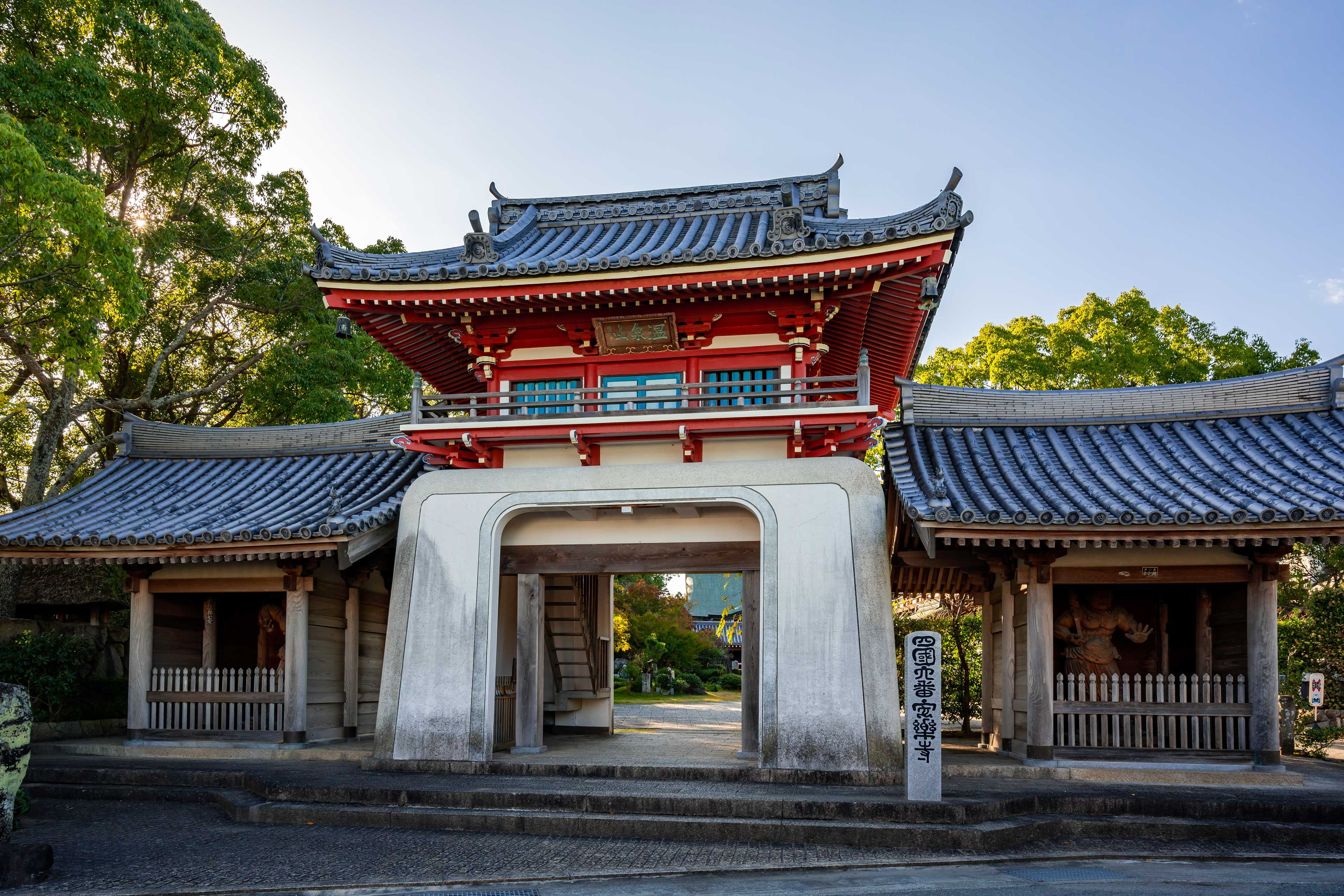
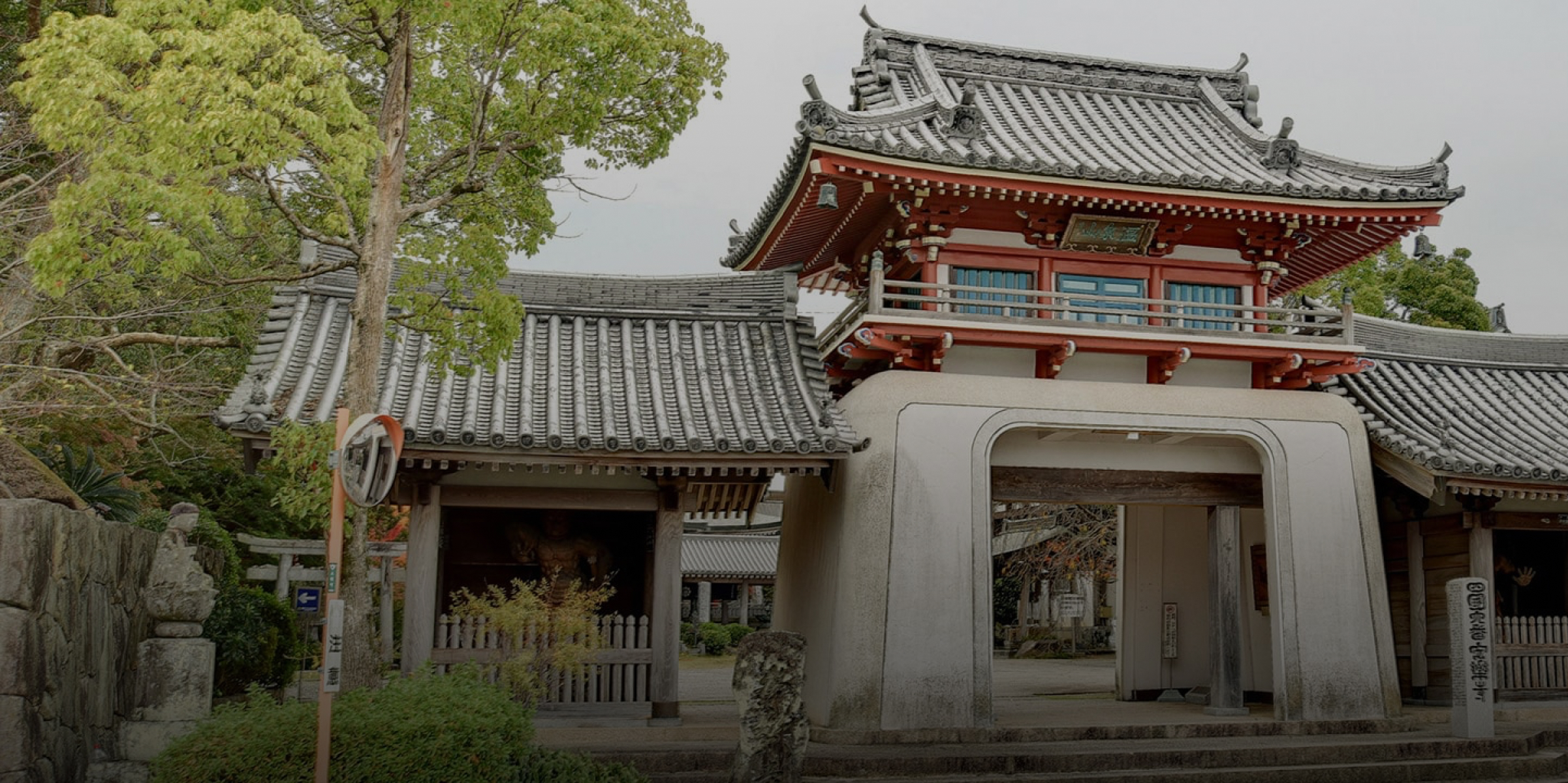
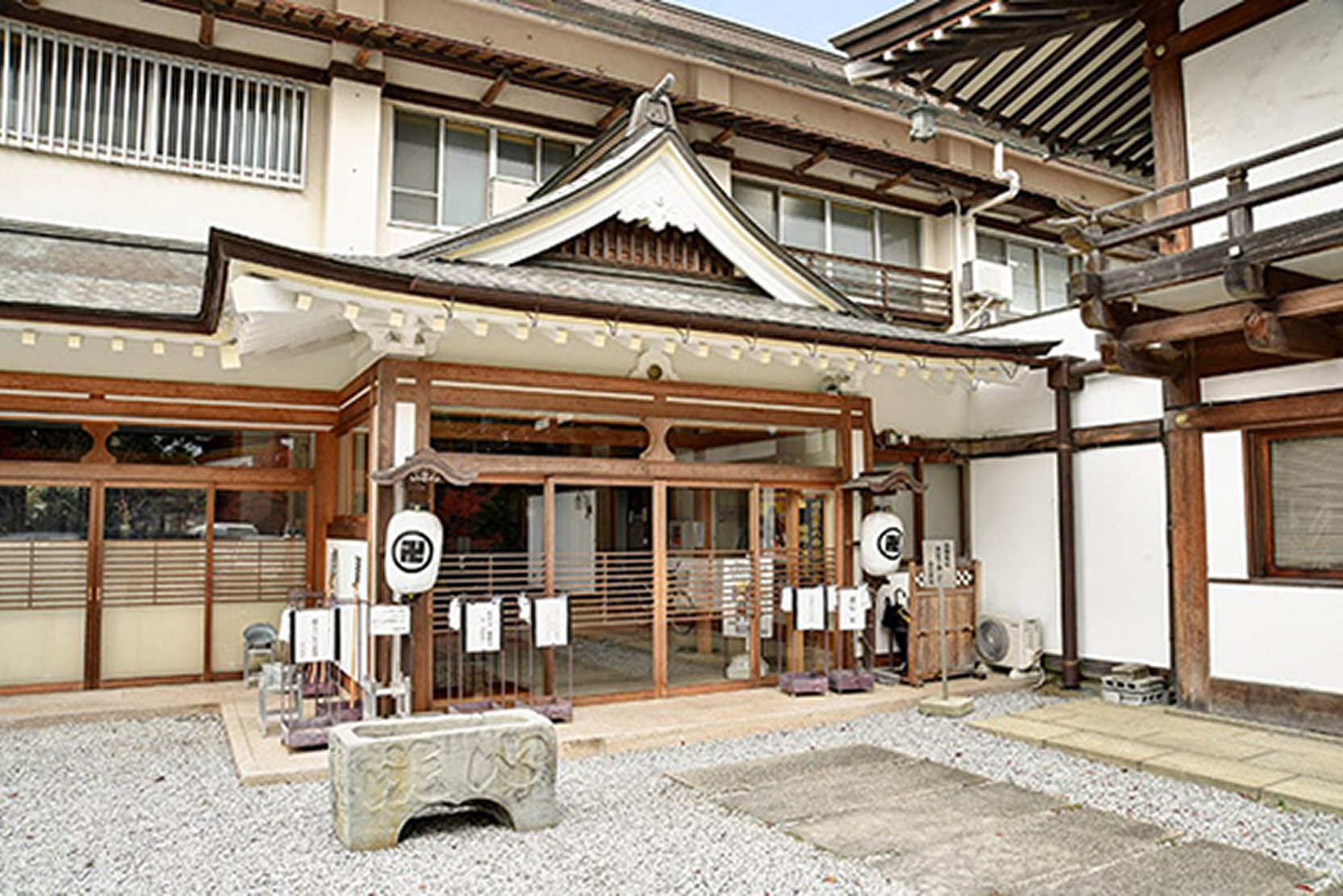
Anraku-ji, Temple No. 6 of the Shikoku Pilgrimage, is located in Itano District, Tokushima Prefecture. Its history dates back to when Kobo Daishi (Kukai) discovered the hot spring here during his practice in Shikoku in the Heian Period. Since the hot spring water miraculously cured all diseases, Daishi enshrined Yakushi Nyorai, who saves people from illness, as the principal image and named the temple “Onsen-zan (hot spring mountain)”, a rare temple name in Japan.
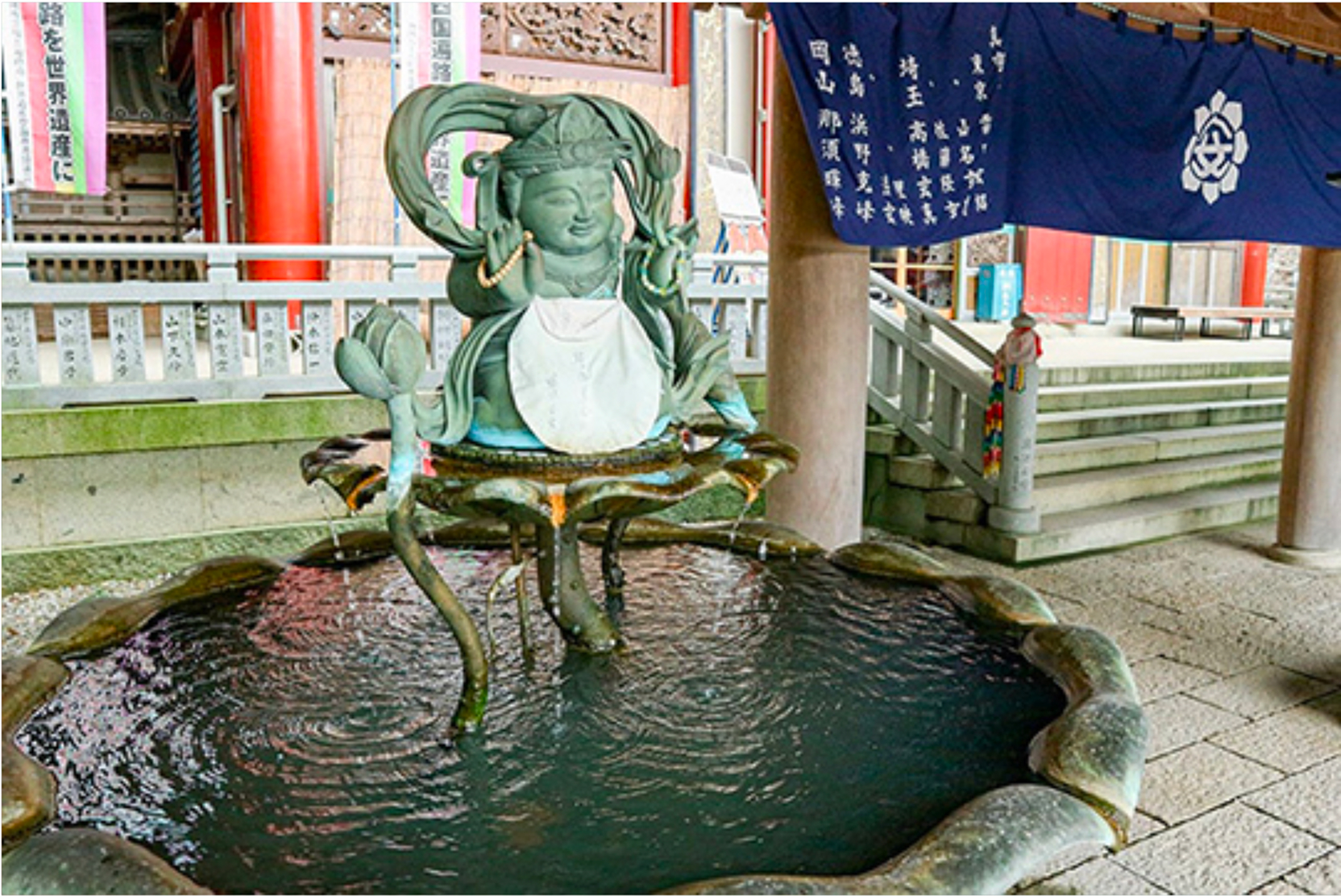
In the Azuchi-Momoyama Period, Hachisuka Iemasa, the founder of the Tokushima Domain, designated Anraku-ji as an “Ekiroji”, a lodging for pilgrims and travelers. There were few proper lodgings at that time, the temple also served as a base for maintaining security in the region.
For over 400 years since then, Anraku-ji temple lodging has been popular as “the first temple lodging of the Shikoku Pilgrimage”, warmly welcoming pilgrims setting out on a long journey and providing food and the hot spring for relaxation. Even though times have changed and the purposes of visits have diversified, the core spirit of Daishi has been passed down by past head priests.
Pilgrimage is not something that binds you; it is something free. As Kukai taught, “To the eyes of a great teacher, even grass on the street can become a precious medicine to save people.” We hope you will feel these teachings for yourself through your stay at the temple lodging.
The Head Priest’s thoughts and philosophy
It has been 20 years since I graduated from a university in Mount Koya and became a monk. For generations, this temple has been authorized as a missionary temple of Mount Koya and has made it its mission to teach the spirit of Daishi to pilgrims staying at the temple lodging. I do not want them to simply visit temples like a stamp rally, but instead I want them to have a precious opportunity to learn about the teachings. However, times have changed. We must continue trying something new to preserve the history as a temple lodging and past head priests’ thoughts that have been passed down for over 400 years and to pass this tradition on to the future. The introduction of QR codes for multilingual support, posting on social media, and “experiential practices", which have gained popularity, are examples of our efforts.
The purpose of the Pilgrimage used to be mainly memorial services and prayers. Today, however, I feel that many pilgrims walk for “a journey of self-discovery” regardless of whether they are Japanese or international pilgrims. Actually, there is no rule that pilgrims have to start from Temple No. 1 in order, and the Pilgrimage is very flexible, allowing pilgrims to start from any temple. Going around Shikoku itself represents a state of enlightenment. Walking the long distance of 1200km encourages pilgrims to think more deeply than usual and gives time to reflect on themselves. It may be similar to the process of the 49-day memorial service, during which people face the grief of losing someone important and gradually come to accept the loss.
There is a saying in Daishi’s teachings: ”To the eyes of a great doctor, everything one encounters is medicine.” For such a doctor, even grass on the street can become a precious medicine to save people. In other words, nothing should be disregarded and the potential of every person is equally precious. In Buddhism, there is a teaching called the “Middle Way”, which steers clear of both sensual indulgence and asceticism. It is very difficult to be “moderate”, and it is impossible to understand the Middle Way without experiencing many things. When people feel lost in life in today’s complex, AI-driven society, I hope that walking around Shikoku by oneself and experiencing Buddhist teachings and the warmth of people can provide a hint for opening a new chapter in life.
A unique “experiential” temple lodging where you can savor Buddhist art and an extraordinary atmosphere with all your senses.
”Evening practices” that immerse you in the world of Buddhism with five senses.
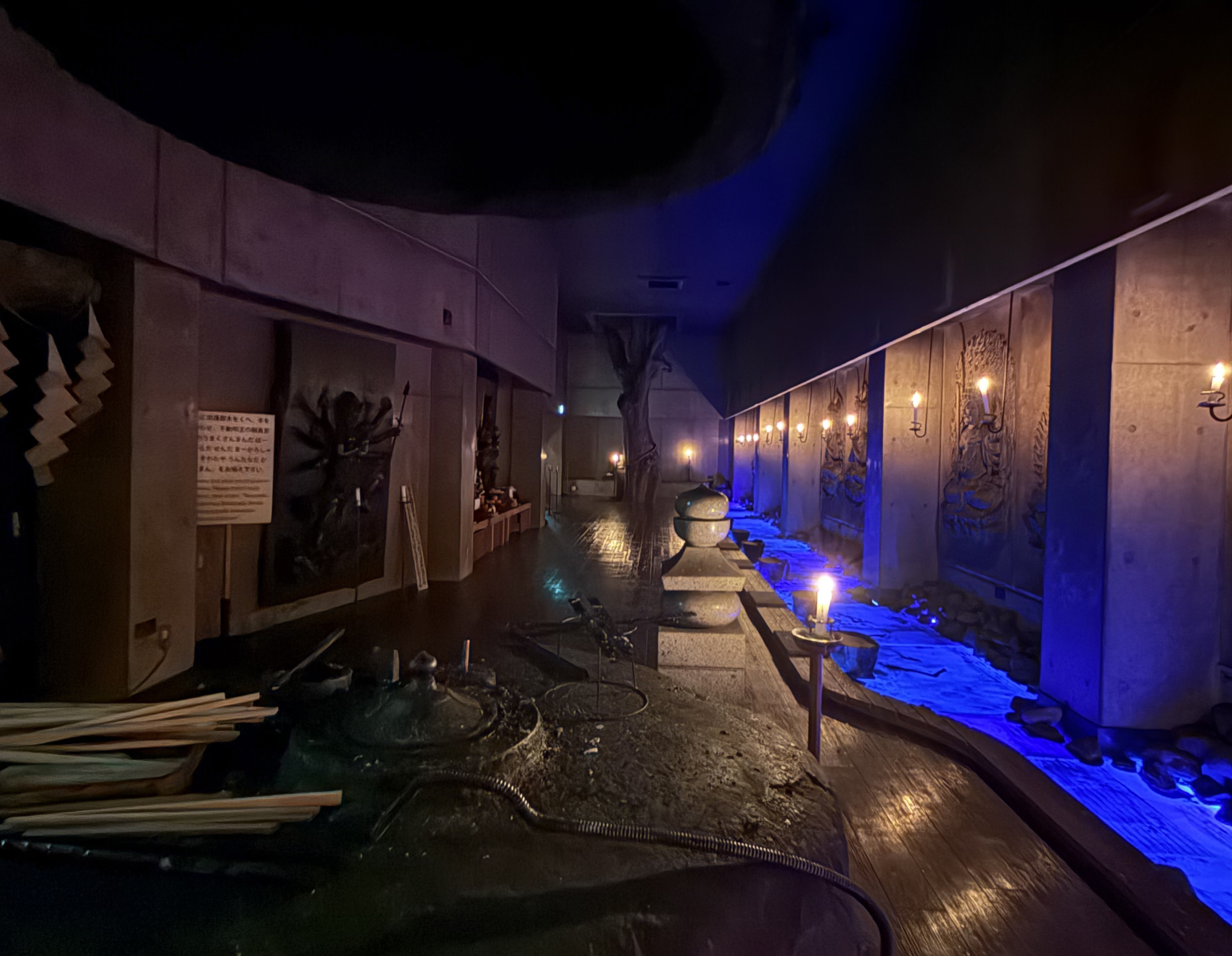
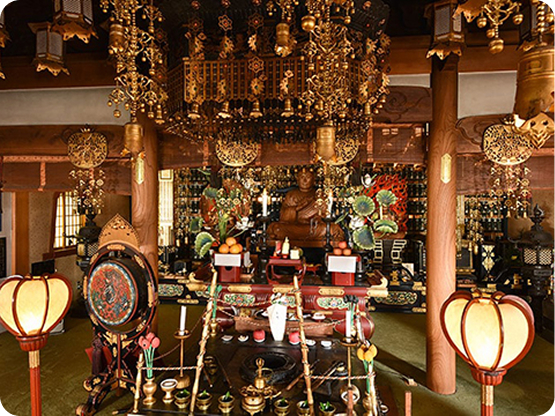
A stay at Anraku-ji temple lodging is not just a stay, but an "extraordinary experience”. During the evening practices held after dinner, you first join a Buddhist sutra in the main hall, then proceed together to the inner sanctuary, where you experience a lantern-floating ritual. You tie papers with your ancestors’ posthumous names to branches of a camphor tree and write your wishes on gomagi wooden prayer sticks, which are then offered into the fire. This series of rituals draws you into a deep spiritual world, like a calming experience.
An overwhelming collection of Buddhist art up close
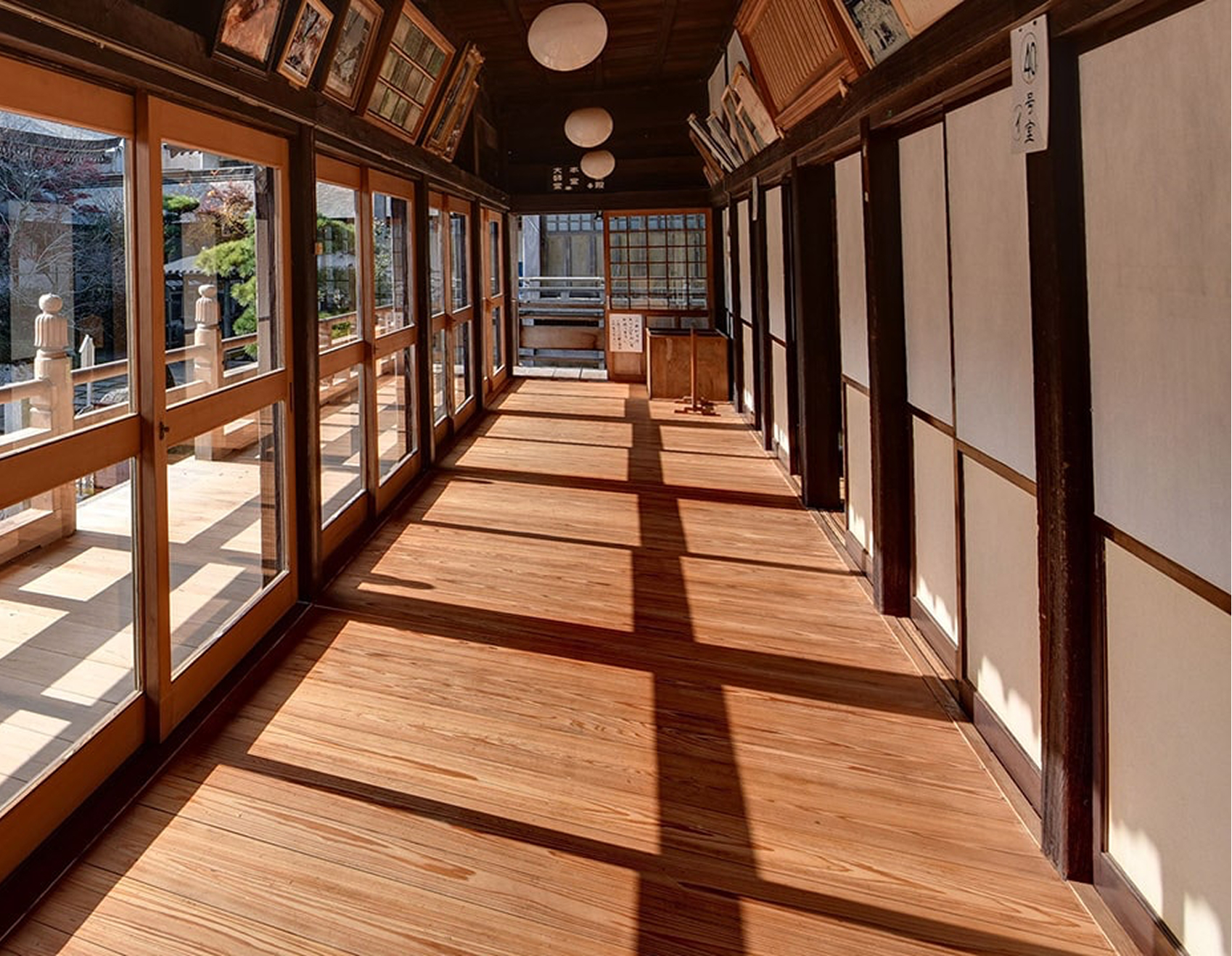
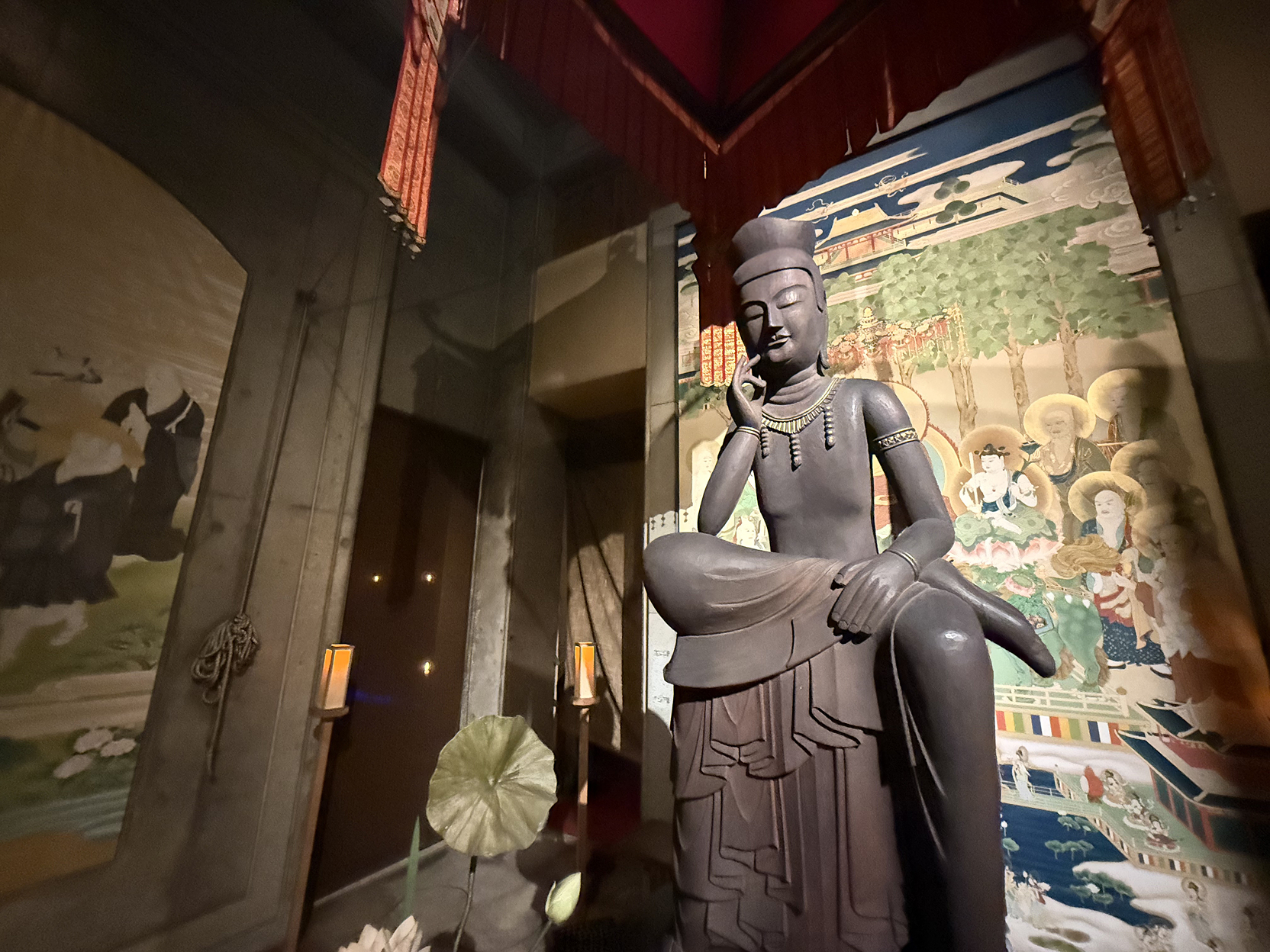
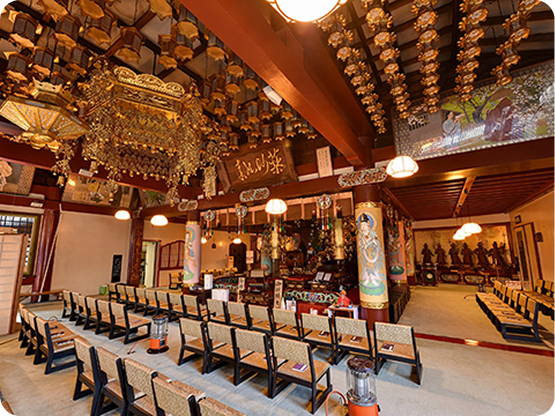
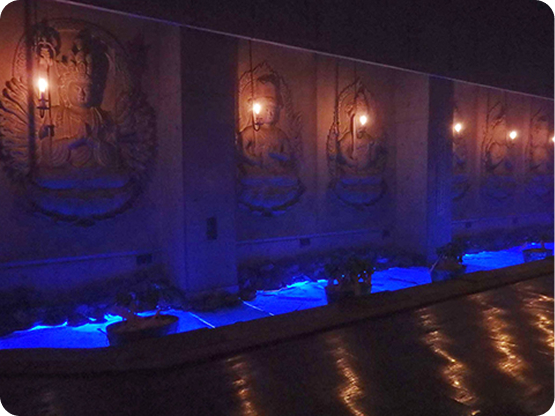
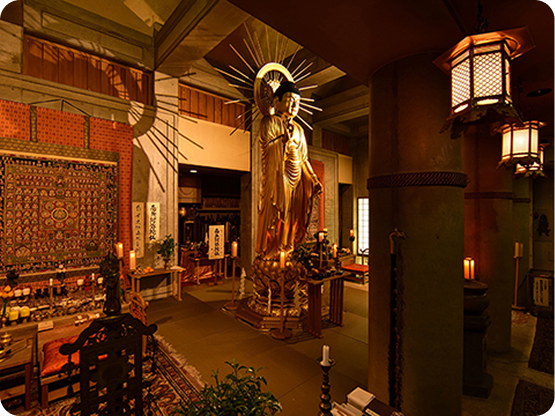
The temple buildings and grounds also have an overwhelming collection of Buddhist art. Dynamic Nio guardian statues crafted by Myokei Matsumoto, one of Japan’s leading Buddhist sculptors, and more than 60 wooden and stone Buddha statues that can be viewed up close. captivate all who see them. In addition, we have various cultural treasures such as a replica of calligraphy handwritten by Kobo Daishi (Kukai) in his twenties, his famous maxi—”Do not speak of others’ shortcomings nor boast of your own virtues”— and historical memorial tablets associated with the Hachisuka Family, the ruling clan of the Tokushima Domain. These cultural treasures, scattered throughout the temple, can be fully appreciated only through a stay.
“Kobo’s hot spring”, which has been flowing for over 1200 years
Since many pilgrims stay here on the first day of their journey, we provide in our large communal bath the sacred hot spring: “Kobo no Yu”, which is said to have been discovered by Kobo Daishi, to prepare pilgrims both mentally and physically for a long journey. We hope that this hot spring, said to be effective for nerve pain or muscle pain, will ease your fatigue from the journey and help you regain your energy for the following day.
Heartwarming episodes with pilgrims
- “A journey of self-discovery” beyond borders and empathy
- One day, I talked with an international pilgrim who had come from overseas. He told me, “I’ve recently retired, and I am walking around Shikoku while thinking about what to do next in my life.” Although our languages and cultures were different, I was deeply struck by how thoughts of “self-discovery”—pausing at a turning point in life and reflecting on oneself while walking— are common across the world. I also reconfirmed the universal value of the Shikoku Pilgrimage at the moment.
- Tears shed for one’s ancestors during the lantern-floating ritual
- During evening experiential practices, participants tie papers with their ancestors’ posthumous names or the names of deceased loved ones to branches of a camphor tree, taking part in a practice rooted in the belief that their spirits reside in evergreen trees. When participants from overseas, including Taiwan, joined, we invited them to “offer prayers while thinking of your father or mother who has passed away.” Many were deeply moved beyond the barriers of language, and some were brought to tears. We were also deeply touched, reminded that the feelings for those we cherish have no borders.
Introduction to the temple lodging
The first temple lodging on the Shikoku 88 Temple Pilgrimage
“Onsen-zan Anraku-ji” named by Kobo Daishi because of the miraculous spring that gushed forth, believed to be effective against all ailments. The temple lodging, which has been cherished by pilgrims for 400 years, offers a variety of stay plans to meet modern and diverse needs, from pilgrims to tourists and business travelers, as well as those traveling by campervan. Experience Buddhist teachings and healing in a historic, extraordinary atmosphere.
About stay
Anraku-ji Temple Lodging
Visit the official website hereOne example of stay plans
We offer plans with two meals included (dinner and breakfast) or room-only plans. Prices vary depending on the season. Please click here for details.
- ※Reservations for meal-included plans must be made by 9PM, three days prior to your stay and those for room-only plans must be made by 11PM, one day prior to your stay.
- ※There are no convenience stores, supermarkets, or restaurants nearby. Guests staying for room-only plans are recommended to buy food in advance or eat before arrival.
Meal
Dinner and breakfast are available for our guests. If you would like meals, please book a plan that includes meals. Dinner will include tempura, simmered dishes, and Tokushima’s local speciality, “soba-gome-jiru, which features a unique chewy texture.We provide a nutritious breakfast, perfect for pilgrims who set out early ※Please note that the menu may change depending on the season.
・Breakfast:7AM
・Dinner:6PM
Check-in / Check-out
- Check-in
- 2PM〜6PM
- Check-out
- 〜9AM
- ※The final check-in is at 6PM. Please contact us if you arrive late.
- ※The curfew is at 9PM. Please refrain from going out after 9PM.
- ※Please contact us directly if you want to stay for three nights or more with meal-included plans or four nights or more with room-only plans.
Access
〒771-1311
Terano Nishi 8, Kamiita Town, Itano District, Tokushima Prefecture(Google Maps)
TEL: 088-694-2046
- ・Next to Anraku-ji (Temple No. 6)
- ・Get off at Itano Station on the JR Kotoku Line → Take the Tokushima Bus bound for Kajiyahara and get off at Higashihara bus stop → Approximately 7 minutes on foot from the bus stop.
- ・If coming from Kobe: Take the Takamatsu Expressway to Itano IC, then take Prefectural Road 12, then Prefectural Road 139.
- ・If coming from Ehime: Take the Tokushima Expressway to Donari IC, then take National Route 318, then Prefectural Road 139.
- ・50 free parkings (no reservation required)
Guest rooms
Azure Dragon Room
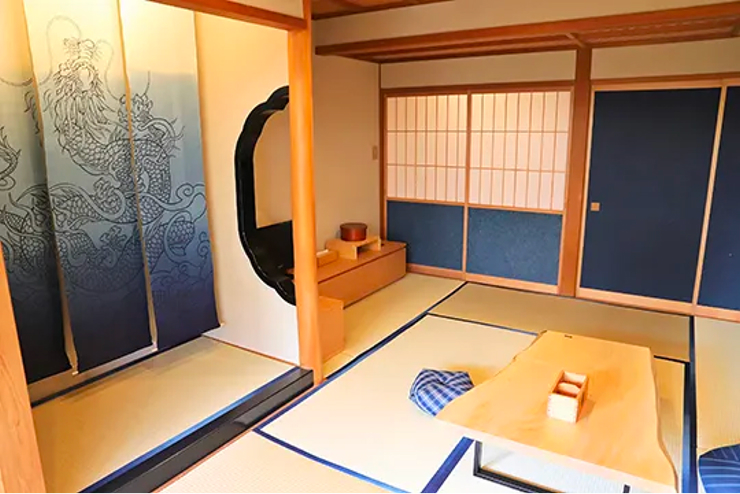
Non-smoking, no bath, no toilet
Newly opened in November 2023, the "Seiryu no Ma" (Blue Dragon
Room), a one-of-a-kind guest room decorated with indigo dye, has been
completed. Tokushima, in the former Awa Province, has a history of indigo
cultivation and dyeing that spans centuries. During the Azuchi-Momoyama
Period, Lord Hachisuka Iemasa of Tokushima opened Anraku-ji Temple as
lodging for pilgrims and protected and encouraged the production of indigo
dye, which led to the flourishing of Tokushima's indigo dyeing and its
nationwide recognition. It is said that during the Meiji era, a British
chemist who visited Japan saw a town decorated with indigo dye and called
the blue color of indigo "Japan Blue," thus making it a symbolic color of
Japan.
Amenities
Hand towel, toothbrush, yukata (Japanese robe), bath towel
Equipments
TV, air conditioner, electric kettle, tea set
※If you wish to stay with 3 to 5 people, you can also use the adjacent 15-tatami mat study room. Please contact us directly for details. ※This room is on the second floor and has a nice view. As the building does not have an elevator, please use the stairs to move around. ※Please smoke in the designated smoking area.Study room (15 tatami mats)
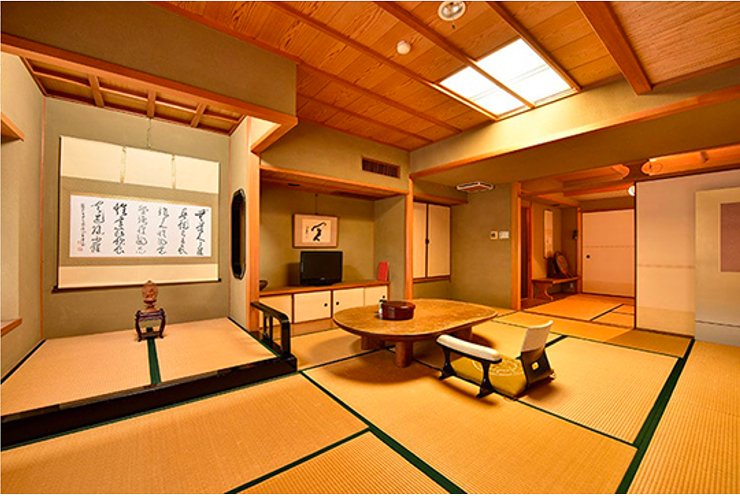
Non-smoking, with private bathroom and toilet
This is a special room, limited to one room only. Spacious at 15
tatami mats, it offers a beautiful Japanese-style space with a tokonoma
alcove and decorative shelves. Located on the second floor, it boasts a
lovely view of the garden from the window.
Amenities
Hand towel, toothbrush, yukata (Japanese robe), bath towel
Equipments
TV, air conditioner, electric kettle, tea set, washbasin
※As the building does not have an elevator, please use the stairs to move around. ※Please smoke in the designated smoking area.Study room (8 tatami mats)
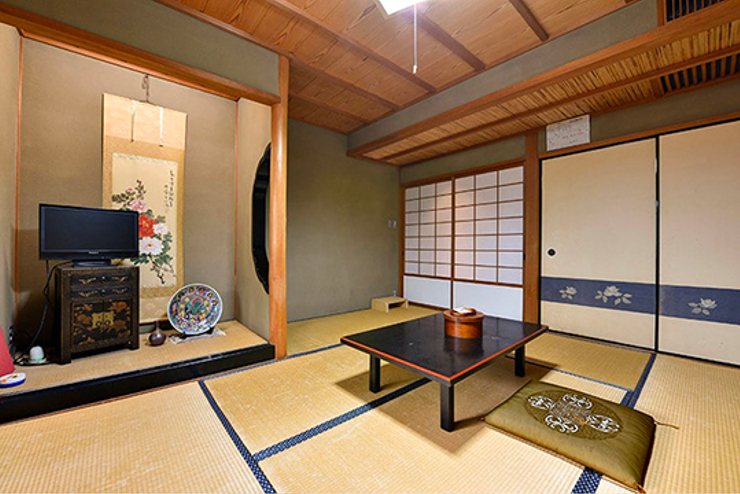
Non-smoking, no bath, no toilet
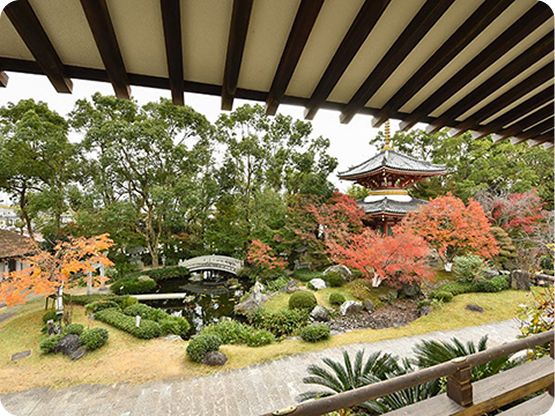
This is a second-floor room with a great view of the garden.
It's a popular room, especially in autumn when you can enjoy the view of the
garden's colorful foliage.
Amenities
Hand towel, toothbrush, yukata (Japanese robe), bath towel
Equipments
TV, air conditioner, electric kettle, tea set, washbasin
※As the building does not have an elevator, please use the stairs to move around. ※Please smoke in the designated smoking area. ※Please use the shared restroom located just outside the hallway.Auditorium Single/Twin
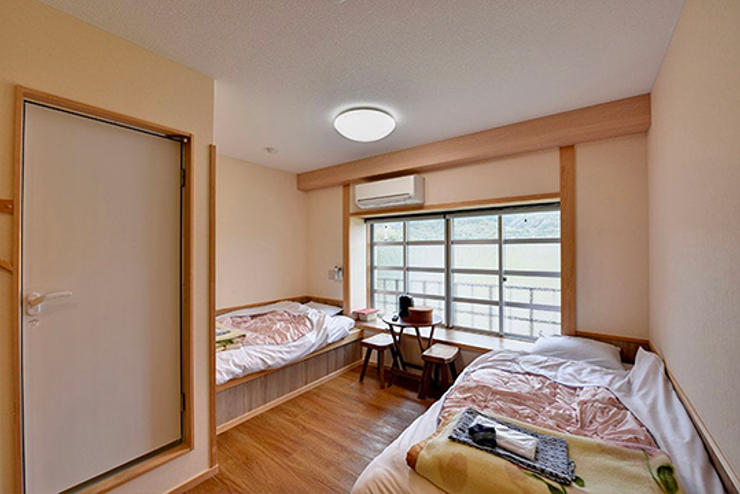
Non-smoking, with en-suite bathroom
These rooms are located in
the two-story "auditorium." They are popular with both business and leisure
travelers. Single and twin rooms are available, so please choose according
to the number of people in your party.
Amenities
Hand towel, toothbrush, yukata (Japanese robe), bath towel
Equipments
TV, air conditioner, electric kettle, tea set
※As the building does not have an elevator, please use the stairs to move around. ※Please smoke in the designated smoking area.New building single/twin rooms
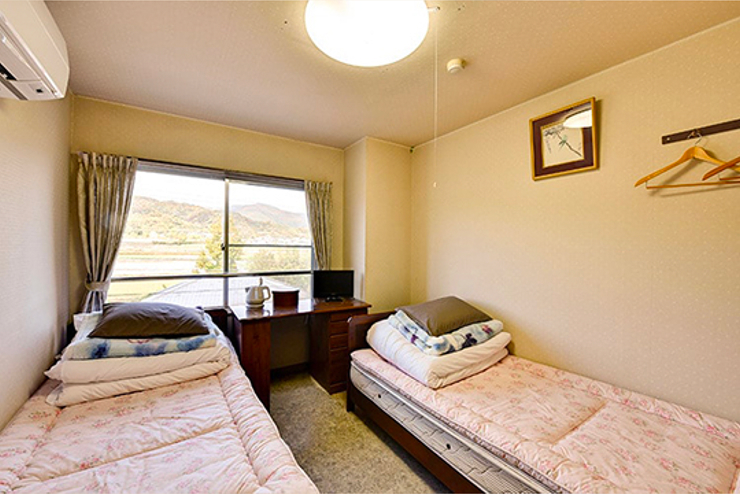
Non-smoking, no bath, no toilet
These rooms are located in the three-story "New Wing" building,
which has an elevator. Because these rooms do not have private bathrooms or
toilets, they are available at a reasonable price. Single and twin rooms are
available, so please choose according to the number of people in your party.
Amenities
Hand towel, toothbrush, yukata (Japanese robe)
※Bath towels are not included (rental: 200 yen each)Equipments
TV, air conditioner, electric kettle, tea set
※You cannot specify a floor As the building does not have an elevator, please use the stairs to move around. ※Please smoke in the designated smoking area.New building Japanese-style room (6 to 12 tatami mats)
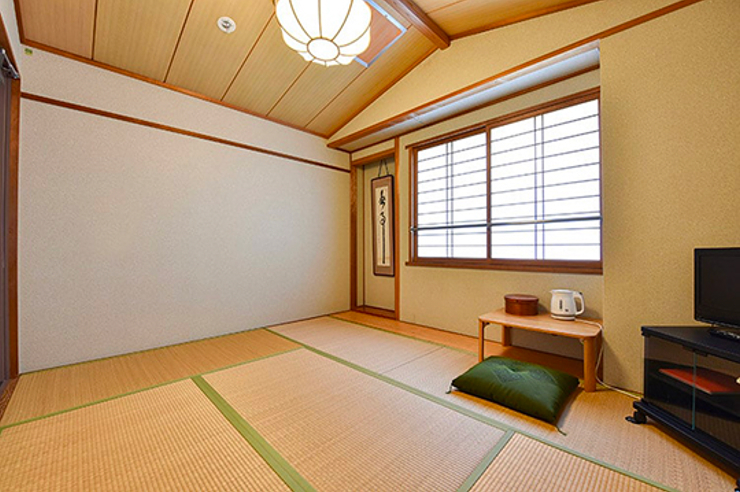
Non-smoking, no bath, no toilet
These rooms are located in the three-story "New Wing" building,
which has an elevator. Because these rooms do not have private bathrooms or
toilets, they are available at a reasonable price. Room sizes range from 6-7
tatami mats to 10-12 tatami mats; please choose the size that best suits
your needs.
Amenities
Hand towel, toothbrush, yukata (Japanese robe)
※Bath towels are not included (rental: 200 yen each)Equipments
TV, air conditioner, electric kettle, tea set
You cannot specify a floor※As the building does not have an elevator, please use the stairs to move around. Please smoke in the designated smoking area.Kobo no Yu
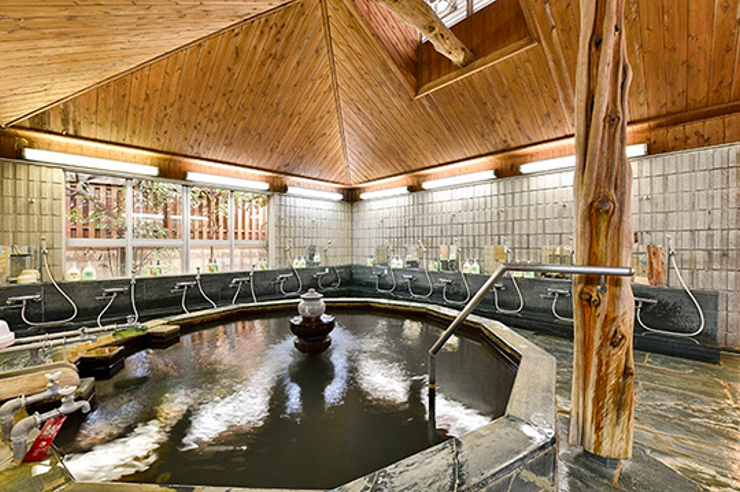
This is a sacred spring said to have been discovered by Kobo Daishi. The hot
spring water, which led to the construction of a temple in this location, is
believed to be effective for neuralgia, muscle pain, and post-illness
recovery, and has soothed the fatigue of pilgrims and travelers for 400
years. Please bathe in the spring, giving thanks for nature's blessings and
praying for good health and longevity.
※Depending on the number of guests, we will prepare either a large or
small communal bath.
Bath time
3PM〜9PM
※Hours may vary depending on the day
Amenities
Rinse-in shampoo, body soap, and hair dryer are provided
※Bath towels are not provided. (Rental available: 200 yen per towel) ※Other items such as razors, combs, and moisturizers are not provided.Facilities within the building
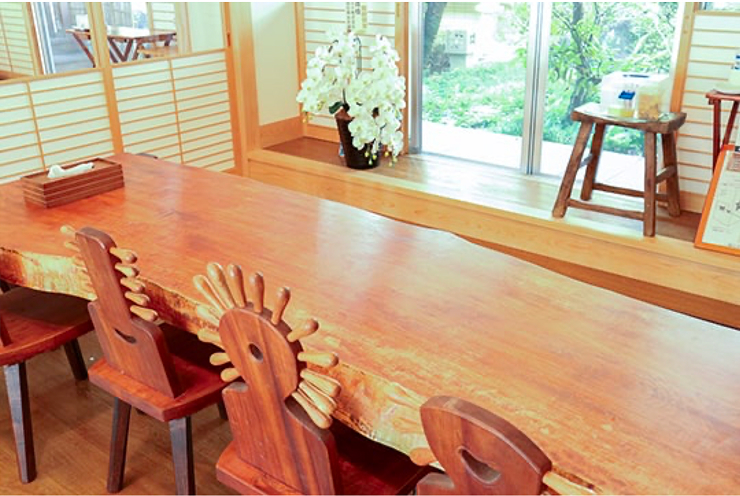
Lobby
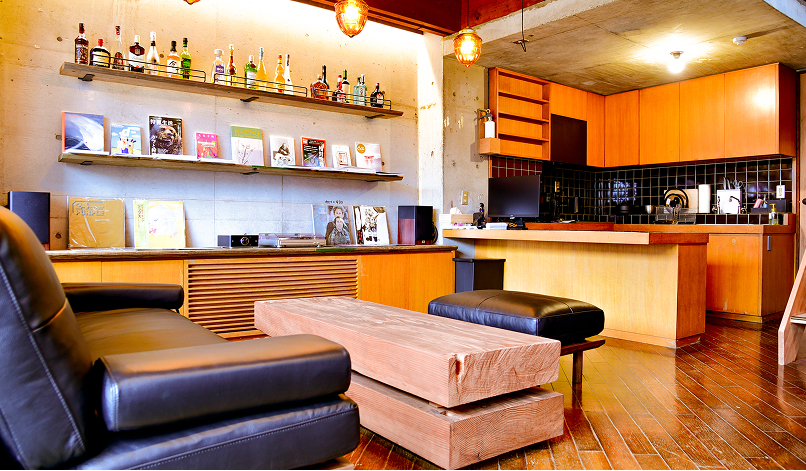
Our temple lodging has a lobby where guests can relax.
Coffee (200 yen per cup) is also available, so please feel free to use it.
Laundromat
We have a coin laundry available, which is convenient
for pilgrims and those staying for extended periods. Dryers are also
available. (Washing machine: 200 yen, Dryer: 100 yen for 30 minutes)
Vending machine
There are soft drink vending machines inside the
building
Deepen your experience
Guests can participate in the "Gongyo", a unique temple lodging experience
- From 7PM (or 5:30PM) We hold a gongyo (chanting sutras before the Buddha) in the main hall.※Participation is optional※Time may change. Please contact us in advance if you wish to participate.
- You can view Buddha and artifacts located in areas that are normally off-limits.
- We also offer ancestral memorial services and prayers with additional fees.
Photo gallery
Other pilgrim lodging interviews
-
Tosa Gyoen STAY UWU - Near Temple No. 31, Chikurinji
A ryokan with 60 years of history opens up a “decentralized hotel” where you can travel as if living in everyday Kochi
Read the article
-
Near Temple No. 85, Yakuirji, and Temple No. 86, Shidoji
Carrying a 220-year legacy, weaving the philosophy of Kukai into the present
——an accommodation that welcomes the world through art and intellect.Read the article