
Experience
After Completing the Pilgrimage Encounter Monet’s Water Lilies in the Light of Chichu Art Museum, Naoshima
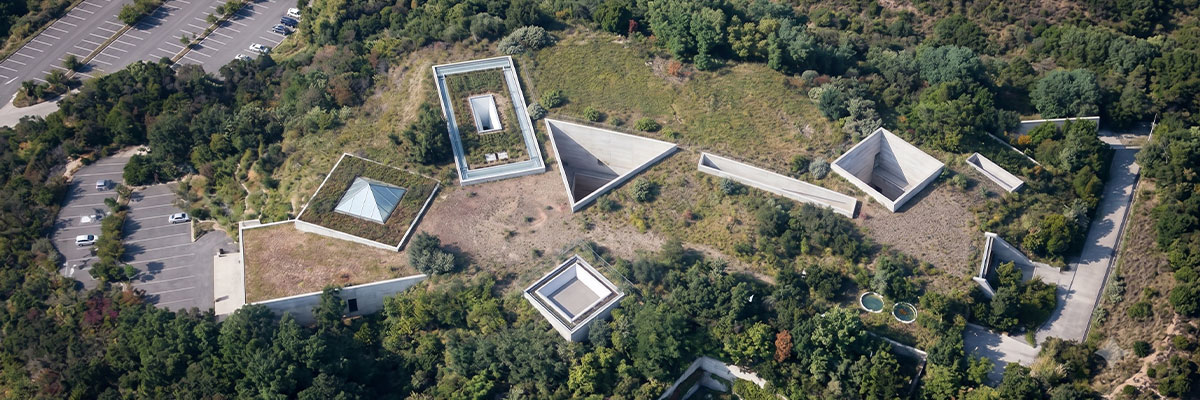
Overview
Chichu Art Museum is located on Naoshima, an island in the Seto Inland Sea, at 3449-1 Naoshima, Kagawa District, Kagawa Prefecture. It opened on July 18, 2004, as a place for contemplating the relationship between nature and humanity.
Designed by architect Tadao Ando, the museum is built mostly underground so as not to disturb the beautiful landscape of the Seto Inland Sea. Its greatest feature is that, although it is underground, natural light pours into the museum. As a result, the artworks and the surrounding spaces change subtly depending on the time of day and the season.
The museum permanently displays works by three artists: Claude Monet, James Turrell, and Walter De Maria. It is operated by the Fukutake Foundation and is one of the major facilities of Benesse Art Site Naoshima.
Highlights
After completing the Shikoku 88 Temple Pilgrimage, Naoshima makes a fitting destination for one more journey—a quiet reward for yourself on an island of art in the Seto Inland Sea.
-
View five of Monet’s Water Lilies by natural light alone.
The Claude Monet room displays five works from Monet’s late Water Lilies series. They are viewed without artificial lighting, using only natural light. The room’s size, design, and materials were carefully chosen to unite Monet’s paintings with the surrounding space. The floor is made of Bianco Carrara marble from Italy. Through Ando’s architecture, the room gives spatial form to Monet’s vision of experiencing painting in natural light. The museum’s concept began when Soichiro Fukutake acquired Monet’s approximately 2-by-6-meter painting Water Lily Pond.
-
Experience spaces where light itself becomes the artwork.
Walter De Maria’s Time/Timeless/No Time (2004) is a solemn space featuring a 2.2-meter-diameter sphere and 27 gilded wooden sculptures, viewed under natural light from the ceiling. In the James Turrell rooms, visitors can experience three works—Afrum, Pale Blue, Open Field, and Open Sky—in chronological order. Among them, Open Sky invites visitors to quietly gaze at the sky framed by an opening in the ceiling.
-
A point of connection with pilgrimage culture.
The Shikoku Pilgrimage is a circular journey supported by deeply rooted customs such as dogyo ninin, the idea of walking together with Kobo Daishi, and osettai, the practice of local people offering hospitality to pilgrims without expecting anything in return. After reaching Temple No. 88, Okuboji, in Sanuki City, Kagawa Prefecture, and completing the pilgrimage, visitors may cross to Naoshima and the art islands of the Seto Inland Sea. Ending the long journey with a quiet encounter with light can feel like another form of pilgrimage.
Information
Please note that prices, services, and reservation methods are current as of the time of writing and may be subject to change.
- Nearest Temple:
- Naoshima is an island in the Seto Inland Sea and is not located directly on the Shikoku Pilgrimage route, so there is no nearest temple in the strict sense. It is best understood as a “reward” destination after completing the pilgrimage at Temple No. 88, Okuboji, in Sanuki City, Kagawa Prefecture, the final temple of the Kagawa section known as the “Dojo of Nirvana.” Around Takamatsu Port, where ferries to Naoshima depart, there are several Kagawa temples, including Temple No. 80, Kokubunji; Temple No. 84, Yashimaji; Temple No. 85, Yakuriji; and Temple No. 86, Shidoji.
- Duration:
- The official suggested viewing time inside the museum is approximately 1 to 1.5 hours. Visitors who wish to enjoy the architecture and gardens at a more relaxed pace should allow 2 to 3 hours.
- Price:
- Weekdays: ¥2,500 online / ¥2,800 at the ticket window. Weekends and holidays: ¥2,700 online / ¥3,000 at the ticket window. Free for visitors aged 15 and under, reservation required. Prices are as of June 2026.
- Language:
- The official website is available in English, Simplified Chinese, and Traditional Chinese. An English online ticketing site is also available. Payment is by credit card only.
- Booking:
- Fully reservation-based, with timed entry slots every 15 minutes. Reservations must be made online. If online tickets are sold out, same-day tickets are not available at the museum.
- Access:
- Takee a ferry from Takamatsu Port to Miyanoura Port (Naoshima) (approx. 50–60 min), then take the town bus to Tsutsuji-so and transfer to the free shuttle bus to the museum (approx. 10 min).